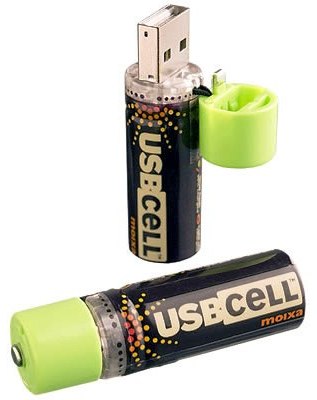
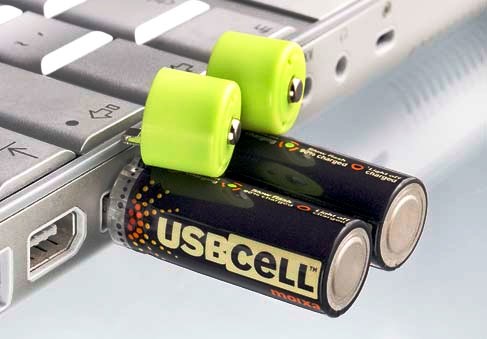
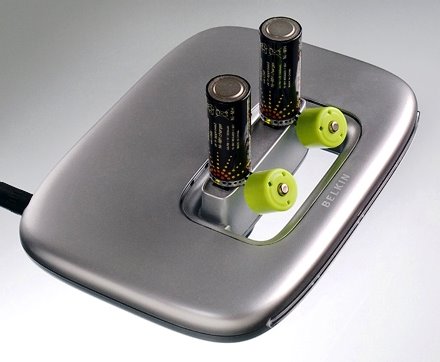
Having a USB memory stick is like carrying a portable hard drive the size of a packet of chewing gum. USB memory sticks are the fastest in the flash memory card industry with transfer rates up to 60MB/s and capacities ranging from 64MB to 4GB. Caption & Image Credit: mediaheaven.co.uk
Get On The Stick! ... With Cuba’s IT Underground
Necessity is the mother of invention – or in this case adaptation. Information technology in Cuba, with its heavy-handed oversight of human activity, is in a process of breaking out of the grip of the government sanctions against the freedom of information sharing and publishing.
News, information, and entertainment media in Cuba, is hard to come by unless one is able to afford the time to log on to a computer in one of the few “Cyber Cafés”, have access to a tourist hotel internet portal, is a student, or has access to a smuggled dish and secretly grab the information for later viewing and sharing - OFFLINE!
 Dutch made , USB Memory sticks manually selected for their natural beauty, and professionally handmade into unique and personal USB memory sticks. From ooms. Order Online - 256 MB - 45 Euro 1GB - 70 Euro. Caption & Image Credit: oooms.nl
OFFLINE in Cuba is an intranet (an in-country internet) patched together through a “postal service” email communication connection that the government is having trouble shutting down. The “Whack-A-Mole” process the government is left with can not stop the viral sharing aided with the use of USB memory sticks.
 At an e-mail center in Havana, customers work under an employee’s watchful eye. Old Havana has only one true Internet cafe, down from three a few years ago. Caption & Image Credit: Jose Goitia - The New York Times
This excerpted from The New York Times -
Cyber-Rebels in Cuba Defy State’s Limits
By JAMES C. McKINLEY Jr. - New York Times, HAVANA - March 6, 2008
A growing underground network of young people armed with computer memory sticks, digital cameras and clandestine Internet hookups has been mounting some challenges to the Cuban government in recent months, spreading news that the official state media try to suppress.
Last month, students at a prestigious computer science university videotaped an ugly confrontation they had with Ricardo Alarcón, the president of the National Assembly.
Mr. Alarcón seemed flummoxed when students grilled him on why they could not travel abroad, stay at hotels, earn better wages or use search engines like Google. The video spread like wildfire through Havana, passed from person to person, and seriously damaged Mr. Alarcón’s reputation in some circles.
----
“It passes from flash drive to flash drive,” said Ariel, 33, a computer programmer, who, like almost everyone else interviewed for this article, asked that his last name not be used for fear of political persecution. “This is going to get out of the government’s hands because the technology is moving so rapidly.”
Cuban officials have long limited the public’s access to the Internet and digital videos, tearing down unauthorized satellite dishes and keeping down the number of Internet cafes open to Cubans. Only one Internet cafe remains open in Old Havana, down from three a few years ago.
Hidden in a small room in the depths of the Capitol building, the state-owned cafe charges a third of the average Cuban’s monthly salary — about $5 — to use a computer for an hour. The other two former Internet cafes in central Havana have been converted into “postal services” that let Cubans send e-mail messages over a closed network on the island with no links to the Internet.
----
Young people here say there is a thriving black market giving thousands of people an underground connection to the world outside the Communist country.
 Swiss army knife with USB memory stick Memory size: 128MB 256MB 512MB 1GB 2GB 4GB 8GB. Caption & Image Credit: sz-wholesale.com
People who have smuggled in satellite dishes provide illegal connections to the Internet for a fee or download movies to sell on discs. Others exploit the connections to the Web of foreign businesses and state-run enterprises. Employees with the ability to connect to the Internet often sell their passwords and identification numbers for use in the middle of the night.
Hotels catering to tourists provide Internet services, and Cubans also exploit those conduits to the Web.
Even the country’s top computer science school, the University of Information Sciences, set in a campus once used by Cuba’s spy services, has become a hotbed of cyber-rebels. Students download everything from the latest American television shows to articles and videos criticizing the government, and pass them quickly around the island.
----
The video of Mr. Alarcón’s clash with students was leaked to the BBC and CNN, giving the world a rare glimpse of the discontent among the young with the system.
----
Another event many people witnessed through the digital underground was the arrival in the United States of Carlos Otero, a popular television personality and humorist in Cuba who defected in December while on a trip to Toronto.
Illegal antennas caught signals from Miami television stations, which youths turned into digital videos and shared. Though the event smacked more of celebrity news than politics, it would never have been shown on the official media.
Some young journalists have also started blogs and Internet news sites, using servers in other countries, and their reports are reaching people through the digital underground.
Yoani Sánchez, 32, and her husband, Reinaldo Escobar, 60, established Consenso desde Cuba , a Web site based in Germany. Ms. Sánchez has attracted a considerable following with her blog, Generación Y, in which she has artfully written gentle critiques of the government by describing her daily life in Cuba. Ms. Sánchez and her husband said they believed strongly in using their names with articles despite the possible political repercussions.
Shortly before Raúl Castro was elected president last week to replace his ailing brother, Fidel, Ms. Sánchez wrote a piece describing what sort of president she wanted. She said the country did not need a soldier, a charismatic leader or a great speaker, but “a pragmatic housewife” who favored freedom of speech and open elections.
Writing later about Raúl Castro’s first speech as president, she criticized his vague promises of change, saying they were as clear as the Rosetta Stone was when it was first found. Both essays would be impossible to publish in Cuba.
----
Because Ms. Sánchez, like most Cubans, can get online for only a few minutes at a time, she writes almost all her essays beforehand, then goes to the one Internet cafe, signs on, updates her Web site, copies some key pages that interest her and walks out with everything on a memory stick. Friends copy the information, and it passes from hand to hand. “It’s a solid underground,” she said. “The government cannot control the information.”
It is spread by readers like Ricardo, 28, a philosophy student at the University of Havana who sells memory sticks to other students.
----
Like many young Cubans, Ricardo plays a game of cat and mouse with the authorities. He doubts that the government will ever let ordinary citizens have access to the Internet in their homes. “That’s far too dangerous,” he said. “Daddy State doesn’t want you to get informed, so it preventively keeps you from surfing.”
Pedro, a midlevel official with a government agency, said he often surfed Web sites like the BBC and The Miami Herald at work, searching for another view of the news besides the ones presented in the state-controlled media. He predicted that the 10,000 students studying the Internet and programming at the University of Information Sciences would transform the country over time, opening up more and more avenues of information.
“We are training an army of information specialists,” he said.
Reference Here>>