Showing posts with label QR. Show all posts

Saturday, February 25, 2012

The Automating QR (Quick Response) Code, Smart Phones, And You


Loyal customers, who are less likely to shop online, can be enticed by QR codes to come into the store after they have scanned a code and experienced rich videos, images, or in-store contests. Recently luxury retailer Ralph Lauren matched up with Red Fish Media to design a custom QR code placed in windows at various Ralph Lauren locations. Once scanned, the customer was enticed to enter the store for a chance to win tickets to the 2012 men’s US Open finals and a $3,000 Ralph Lauren wardrobe. Image Credit: Ralph Lauren

The Automating QR (Quick Response) Code, Smart Phones, And You

A cellphone with a camera isn’t a communications device with a way to capture pictures and share them with friends … rather, it’s a web enabled handheld data scanner with a display which automates the way to reach out, get information, be involved socially, and get things done.

In order to have one's phone behave more like a tool than a personalized toy, all one has to do is download a simple program into the cellphone and presto – the camera takes a picture (scans) of a symbol printed on a billboard, flyer, magazine, or TV/Computer display screen then decodes it and has the phone access a “(dot) mobi” webpage on the internet through a series of pre-scripted commands. Quick, Simple, and Easy.

Image Credit: Ralph Lauren

So why hasn’t this form of consumer automation taken off in the larger way it has in Japan and other countries? Hard to say, but get ready because the symbology revolution will be vying for your attention at a cellphone, real estate operation, bus stop, television screen, website, or specialty retail store around the corner from where you live, right now ... it's that weird square with squares in it.

There may be many codes (symbologies) offered by program automation developers, each with their own strengths and benefits, however, if your phone has limited memory space in which to store the software necessary to decode the symbology, then the one code program the cellphone should contain is the QR Code … the best code ever.

Image Credit: Ralph Lauren

This excerpted and edited from Multichannel Merchant Magazine -

R U Ready 4 QR Codes?
By Tim Parry, Multichannel Merchant

CONSIDERING MOBILE MARKETING? Then you should probably start thinking about quick response (QR) codes. These two-dimensional barcodes can provide a vital link between print or broadcast media and mobile commerce.
----
WHAT ARE THEY? QR codes store information — namely mobile Website URLs — that can be read by devices with cameras, like cell phones. A user with a Web-enabled camera phone equipped with the QR reader software can scan the image of the QR code; decoding software reads the information and prompts the phone's browser to go to a programmed URL.

WHAT'S THE BENEFIT TO YOU? Let's say you have a QR code printed on an advertisement or catalog. A customer could scan it with his cell phone to be directed to your mobile site — and hopefully start buying immediately.

IS ANYBODY USING THEM? Upscale apparel brand Ralph Lauren, for instance, burst onto the mobile commerce scene in August using the technology. The merchant put QR codes on print advertisements, store windows and mailers so that with one wave of a Web-enabled camera phone — with QR reader software — the user is whisked away to a landing page at m.ralphlauren.com.

The mobile site was initially launched back in 2008 with a showcase of its limited edition U.S. Open Collection and other Ralph Lauren classics such as polo shirts, oxfords and chinos. Mobile users could also check out a Ralph Lauren style guide, watch tennis videos, and read articles about the U.S. Open in real time.

“We see mobile as a key channel for marketing, advertising and commerce for all of our brands and retail concepts,” says Miki Berardelli, Ralph Lauren's vice president, global customer strategy and retail marketing. “QR codes are part of the strategy and they serve as a conduit, providing an easy way for people to access the mobile Web.”

Users can download the QR reader application for free from Ralph Lauren; the technology is also available from numerous other sources online.

David Harper, founder/CEO of Website development firm Engagelogic and mobile content management and social networking software company Winksite, hopes the Ralph Lauren launch will encourage others to incorporate QR codes in their mobile commerce campaigns. But the early adaptors like Ralph Lauren may need to do more to educate people about the technology.
----
Why aren't more using QR codes? Creating a basic QR code is easy enough: Multichannel Merchant generated the code that appears on this issue's cover in a matter on minutes on Winksite.com. (Test it with your cell phone camera.)

Dave Sikora, CEO of m-commerce provider Digby, blames a lack of consumer awareness of the technology, and the inability of phones to accurately read the codes.
----
But Harper contends that adding a QR code reader application to a phone is no harder than downloading software to your personal computer. You can do a search for “QR code reader” on your mobile browser and find a site you want to download it from. Once installed, the reader application will show up in the applications folder, and its icon will appear on the screen.

And the QR reader does not have to point perfectly perpendicular for the QR code to be correctly translated by the mobile device, he adds. Even a wave over the code can bring the user to the correct mobile site.
----
Big in Japan

QR codes can be seen everywhere in Japan — no surprise, since Japanese firm Denso-Wave created the technology in 1994. Cell phone users in Japan can click a QR code printed on a poster at a movie theater and view its trailer.

It helps that QR code readers come as a standard feature on many smart cell phones.
----
“When a customer scans the barcode with their phone, it launches a mobile-ready product detail and ordering page,” says Nina Matthews, marketing coordinator for CBC America. “This enables the customer to grab the page for follow-up while on the go or for sharing with others.”
----
Once consumers embrace the technology, Harper envisions some merchants using QR codes on the covers of their catalogs. Eventually, they may generate individual codes to be used for each product offering.

Technology notwithstanding, Digby's Sikora wonders how some merchants would handle the creative elements of incorporating a QR code into their print advertising and catalogs.
[Reference Here]

Image Credit: Ralph Lauren

FAQ's from Ralph Lauren -

Frequently Asked Questions (very basic)

What is a mobile site?
A mobile site is simply a normal web site formatted to fit your mobile phone or device.

Is it necessary to download anything to shop the mobile site?
No. Just enter m.RalphLauren.com into your mobile phone browser and voila...

Can any phone access the mobile site?
Any phone equipped with a web browser can access m.RalphLauren.com.

Will it cost me on my phone bill to use the mobile site?
This service is free from Ralph Lauren but charges from your carrier may apply. Be sure and double-check your plan.

Is it secure to shop from my phone?
Yes. Shopping via mobile device is just as safe as shopping from your home computer.
----
What is a QR code?
These are two-dimensional bar codes—just like you’d find at the grocery store—that direct you to a specific website when you scan them with your cell phone.

[Reference Here]


** Article first published as The Automating QR (Quick Response) Code, Smart Phones, And You at Technorati **

Monday, October 13, 2008

The QR (Quick Response) Code And You

Image Credit: Ralph Lauren

The QR (Quick Response) Code And You

A cellphone with a camera isn’t a communications device with a way to capture pictures and share them with friends… rather, it’s a web enabled handheld with a display and a scanner which automates the way to reach out, get information and get things done.

In order to have one's phone behave more like a tool than a personalized toy, all one has to do is download a simple program into the cellphone and presto – the camera takes a picture (scans) of a symbol printed on a billboard, flyer, magazine, or display screen then decodes it and has the phone access a “(dot) mobi” webpage on the internet through a series of pre-scripted commands. Quick, Simple, and Easy.

Image Credit: Ralph Lauren

So why hasn’t this form of consumer automation been adopted right here in North America (after all, in large consumer societies found in Europe and Japan, this kind of symbology enabled automation has been used and perfected for years. Fact is, this is why a camera was added to the cellphone in the first place.)? Hard to say, but get ready because the symbology revolution will be vying for your attention at a cellphone or specialty retail store around the corner from where you live, soon.

There will be many codes (symbologies) offered, each with their own strengths and benefits, however, if your phone has limited memory space in which to store the software necessary to decode the symbology, then the one code program the cellphone should contain is the one to decode the QR Code … the best code ever.

Image Credit: Ralph Lauren

This excerpted and edited from Multichannel Merchant Magazine -

R U Ready 4 QR Codes?
By Tim Parry, Multichannel Merchant - Oct 1, 2008 12:00 PM

CONSIDERING MOBILE MARKETING? Then you should probably start thinking about quick response (QR) codes. These two-dimensional barcodes can provide a vital link between print media and mobile commerce.
----
WHAT ARE THEY? QR codes store information — namely mobile Website URLs — that can be read by devices with cameras, like cell phones. A user with a Web-enabled camera phone equipped with the QR reader software can scan the image of the QR code; decoding software reads the information and prompts the phone's browser to go to a programmed URL.

WHAT'S THE BENEFIT TO YOU? Let's say you have a QR code printed on an advertisement or catalog. A customer could scan it with his cell phone to be directed to your mobile site — and hopefully start buying immediately.

IS ANYBODY USING THEM? Upscale apparel brand Ralph Lauren, for instance, burst onto the mobile commerce scene in August using the technology. The merchant put QR codes on print advertisements, store windows and mailers so that with one wave of a Web-enabled camera phone — with QR reader software — the user is whisked away to a landing page at m.ralphlauren.com.

The mobile site initially launched with a showcase of its limited edition 2008 U.S. Open Collection and other Ralph Lauren classics such as polo shirts, oxfords and chinos. Mobile users could also check out a Ralph Lauren style guide, watch tennis videos, and read articles about the U.S. Open.

“We see mobile as a key channel for marketing, advertising and commerce for all of our brands and retail concepts,” says Miki Berardelli, Ralph Lauren's vice president, global customer strategy and retail marketing. “QR codes are part of the strategy and they serve as a conduit, providing an easy way for people to access the mobile Web.”

Users can download the QR reader application for free from Ralph Lauren; the technology is also available from numerous other sources online.

David Harper, founder/CEO of Website development firm Engagelogic and mobile content management and social networking software company Winksite, hopes the Ralph Lauren launch will encourage others to incorporate QR codes in their mobile commerce campaigns. But the early adaptors like Ralph Lauren may need to do more to educate people about the technology.
----
Why aren't more using QR codes? Creating a basic QR code is easy enough: Multichannel Merchant generated the code that appears on this issue's cover in a matter on minutes on Winksite.com. (Test it with your cell phone camera.)

Dave Sikora, CEO of m-commerce provider Digby, blames a lack of consumer awareness of the technology, and the inability of phones to accurately read the codes.
----
But Harper contends that adding a QR code reader application to a phone is no harder than downloading software to your personal computer. You can do a search for “QR code reader” on your mobile browser and find a site you want to download it from. Once installed, the reader application will show up in the applications folder, and its icon will appear on the screen.

And the QR reader does not have to point perfectly perpendicular for the QR code to be correctly translated by the mobile device, he adds. Even a wave over the code can bring the user to the correct mobile site.
----
Big in Japan

QR codes can be seen everywhere in Japan — no surprise, since Japanese firm Denso-Wave created the technology in 1994. Cell phone users in Japan can click a QR code printed on a poster at a movie theater and view its trailer.

It helps that QR code readers come as a standard feature on cell phones in Japan and Australia. And Harper says they're starting to become standard in certain parts of China, such as Beijing. (The software remains open-source in the U.S., though Nokia did add it to its N95 model.)
----
“When a customer scans the barcode with their phone, it launches a mobile-ready product detail and ordering page,” says Nina Matthews, marketing coordinator for CBC America. “This enables the customer to grab the page for follow-up while on the go or for sharing with others.”
----
Once consumers embrace the technology, Harper envisions some merchants using QR codes on the covers of their catalogs. Eventually, they may generate individual codes to be used for each product offering.

Technology notwithstanding, Digby's Sikora wonders how some merchants would handle the creative elements of incorporating a QR code into their print advertising and catalogs.
Reference Here>>

Image Credit: Ralph Lauren

FAQ's from Ralph Lauren -

Frequently Asked Questions
What is a mobile site?
A mobile site is simply a normal web site formatted to fit your mobile phone or device.

Is it necessary to download anything to shop the mobile site?
No. Just enter m.RalphLauren.com into your mobile phone browser and voila...

Can any phone access the mobile site?
Any phone equipped with a web browser can access m.RalphLauren.com.

Will it cost me on my phone bill to use the mobile site?
This service is free from Ralph Lauren but charges from your carrier may apply. Be sure and double-check your plan.

Is it secure to shop from my phone?
Yes. Shopping via mobile device is just as safe as shopping from your home computer.

What can I buy through m.RalphLauren.com?
Right now, you can purchase anything from our US Open collections and our RL Classics shop as well as our iconic Ricky Bag. In the coming months, more and more products will be available and eventually you will be able to shop a range of Ralph Lauren products from anywhere you take your mobile phone.

What is a QR code?
These are two-dimensional bar codes—just like you’d find at the grocery store—that direct you to a specific website when you scan them with your cell phone. Learn more about QR, how to get it, and what type of device you need to operate it HERE.

Reference Here>>

Thursday, January 11, 2007

QR Based PM Code - The Best 3D Symbology Ever, Really!

Normal PM Code with data memory capability uses 8-24 colors. Memory ranges from about 0.6MB~1.8MB (4,083,264 figures). Image Credit: C.I.A.

QR Based PM Code - The Best 3D Symbology Ever, Really!

And it is a 5th Generation Media symbology known as the PM Code. With this printed symbology one can use a simple cellphone with a camera and unleash incredible variants of communication ranging from simple data, to sound, to video … all at the snap of a camera button on the phone.

In the worlds of automatic identification and information technology, the question of what is the best machine-readable information-packed symbology ever has been answered ... Again!

Why?

Well, until someone comes up with a device readable code that can hold about 1.236 GB of information (2,854,408,421,376 figures) - Deliver as much information from a printed media symbology (code) to have a phone with the corresponding decode program and a camera play a low-resolution video with sound for approximately 20 seconds, or have the phone reach out automatically to entertainer, advertiser, and manufacturer websites to retrieve additional database stored information via Internet Protocol … then one can dispute this claim!!!

IP (Internet Protocol) based PM Code uses 256 colors. Memory ranges to about 1,236GB (2,854,408,421,376 figures). Image Credit: C.I.A.

The best symbology ever?

The best symbology ever may well be the PM Code (PM = Paper Memory), developed by a relatively new Japanese start-up company known as Content Idea of Asia Co., Ltd. (C.I.A.), The algorithm basis comes from the DENSO Wave - developed QR Code – originally intended for use in tracking and aiding the complex task of automobile parts manufacturing and sourcing throughout the automobile assembly process.
CL Code with data memory capability. Memory ranges from about 72KB (170,136 figures). Image Credit: C.I.A.

C.I.A. also has developed a “sister” code known as the CL Code (CL = Clear Code) which describes the effect of being able to add a code that does not need to be dark contrast against a light background to be decoded. This allows the information reference code to be laid on top of media in a transparent, layered look - in order to not take away from the printed media onto which it is applied.

Simple CL Code application in tomato photo. Image Credit: C.I.A.

The advantages of using the CL Code is that the customer’s viewing of marketing designs and images will not be hampered due to the application of an identifying Physical World Hyperlink or Physical World Identifier/Connection for the customer to use when getting additional information. One technique suggests that the CL Code may be printed in a band of matching product colored ink on the bottle. The information would not be able to be decoded until the contents of the bottle have been consumed or poured out … thus leaving the CL Code in a readable format.


Content Idea of Asia Co., Ltd. Explains the concept this way. Both the CL Code and its more robust “sister” PM Code are examples of 5th Generation Media.

What does this "5th Generation Media mean? Well,

1st Generation Media refers to paper media such as magazines, newspapers, and other printed media stratum.

2nd Generation Media refers to audio radio communication.

3rd Generation Media refers to television, video, and film media communications.

4th Generation Media refers to Information Technologies (IT) found in the digital world of computers and cellular telephones.

So now we come full circle and fuse the previous forms of communication together.

5th Generation Media allows the fusion of all forms of media to interact and cooperate, in order to take the advantage of each form to deliver a more effective level of communication through the application of this unique database found in a 3D (three-dimensional) color QR based code. A simple cellphone with a camera can unleash incredible variants of communication ranging from simple data, to sound, to video - YES VIDEO! … all at the snap of a camera button on the phone.

No IP address – just the PM Code and the “old media” adverts come to life! Applications include listening to portions of songs, videos, short how-to-use vignettes, security for access control, save, re-write, and store data media on flat format paper (instead of CD’s, DVD’s, or HD discs), and well, the sky is the limit.

Hey, how’s this - you are a curator of a museum and you would like the patrons to enjoy the exhibit a little more deeply with sound descriptions of what they are seeing. Place PM Codes next to each display and voila, the patron can hear all they wanted to know about the painting and the painter - complete with a video snippet on the painter’s technique. All of this interactive information without involving the audio/visual department and/or the equipment investment.

Next up?

The addition of smell - Okay, so this may be a little overboard ... but you get the idea!


HT: Content Idea of ASIA co., Ltd.

Tuesday, November 21, 2006

3D Barcode - Auto ID "CUBED"

It's only a matter of time before the world around you is painted with ColorCodes. Wherever you go, wherever you look -- TV, magazines, store shelves, shopping bags, billboards, web banners, T-shirts and more -- you'll see ColorZip in action. Image Credit: ColorZip Japan, Inc.

3D Barcode - Auto ID "CUBED"

That's digital 2D code "X" axis, "Y" axis, and Color!

To the power of three ... that's what I say! What could be more powerful than a code that incorporates color as one of it's discernments? After all, this is a color world.

QR Code (a registered trademark of DENSO WAVE INCORPORATED) breaks out of it's shell through the introduction of a new automatic identification symbology variant - the ColorCode (ColorCode and ColorZip are registered trademarks of ColorZip Media Inc.).

ColorCode is the name of the first ever "3D Barcode" utilized by a server-based content delivery system known as ColorZip.

At the moment, ColorCode is a closed and managed source code symbology designed for use by Brand Managers and Marketing Communication professionals through ColorZip Media - a flexible, real-time, interactive content management system that provides up-to-the-minute CRM data to the consumer.

So, with the ColorZip system, all a consumer needs to do is point a CCD or CMOS camera (with a minimum 100,000-pixel resolution) at TV screens, print ads, magazines, POP displays, outdoor boards, electronic screens, product packages, web banners, T-shirts, and etc. containing a ColorCode, and decoded information sends the consumer's computer or phone to a web server that, in turn, delivers digital information to the consumer that he can use to be informed or make a decision.

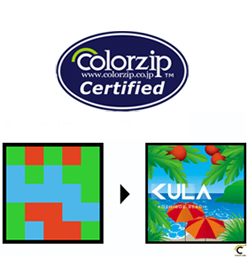
ColorZip Japan now announces [ColorZip Certified Program] to give certificate to our trusted partners and their products. The program is set to find creative design or hardware companies who can cooperate with us to make the ColorCode designs or improve hardware. After thoroughly evaluating creativity, robustness of their product and technology, ColorZip's Partnership is certified and official logo is provided. With the ColorCode, you can appeal your reliability and expand business chances. Image Credit: ColorZip Japan, Inc.

Imagine the possibilities of reaching out to consumers on-the-fly when ColorCodes can be read quickly and easily from a 15 foot distance by mobile phones, Cell PDAs, PCs, and other devices equipped with cameras. Say good-bye to exclusively communicating through one-dimensional print display methodologies.

Excerpts from ColorZip Japan, inc. website -

There's a colorful new world to be explored.

Point your mobile phone at a model in a magazine ad and zip you're visiting her website.

Point your Cell PDA at a music video on TV and zip you've got a sample of the hit single.

Point your cell phone at your favorite team's logo and zip you know the score.
That's the power of ColorZip.

ColorZip works with mobile phones, PC cameras, and other imaging devices that read ColorCodes. Let's say you see a poster for a movie you're interested in. Point your mobile phone at it. The camera in your phone reads a ColorCode printed on the poster. The ColorCode contains information provided by a server. The server then sends data to your phone in the form of content, perhaps a movie trailer. Best of all, it happens instantly, in a zip.


The ColorCode was exhibited at the AUTO-ID EXPO by SATO (printers) held at TOKYO BIG SIGHT. The flower motif ColorCode is for use on flower tags at a florist or nursery. Image Credit: ColorZip Japan, Inc.

Every picture tells a story.

ColorZip also makes watching TV an interactive experience. Suppose you see a product you like on a TV show or commercial. Point your mobile phone at the screen and zip, you can order the product. Perhaps you're watching a TV quiz show. With ColorZip you could play along from home, "answering questions" with your phone and instantly winning prizes.

There are more than 17 billion color patterns available in a 3 mm square code, and in larger codes the possibilities are infinite. Codes can be created in wide variety of shapes, sizes and colors and printed on paper, fabric, glass and other materials. They can appear as corporate and brand logos, designer labels, photos, and virtually anything you can imagine.


It's only a matter of time before the world around you is painted with ColorCodes. Wherever you go, wherever you look -- TV, magazines, store shelves, shopping bags, billboards, web banners, T-shirts and more -- you'll see ColorZip in action.
All you need to do is zip.
Reference Here>>


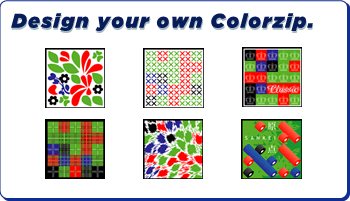
ColorCodes from Origin through Mobile Site have been designed by the Sankei Co Ltd.'s desingners. The design represents their corporate profile and philosophy. Image(s) Credit: ColorZip Japan, Inc.

Excerpts from Newsweek International via MSNBC early this year-

Using Color Codes To Browse the Web
By Christian Caryl (with B. J. Lee in Seoul) - Newsweek International - Jan. 16, 2006 issue

It's an advertiser's dream. Imagine you're sitting in your favorite cafe when something in the business pages catches your eye. That company you're reading about sounds intriguing. So you take out your mobile phone and focus the camera lens on a small splotch of color embedded in the corner of the article. Suddenly the phone's screen is displaying real-time stock prices and up-to-the-minute company headlines.

It's become a truism that the Internet is transforming the way businesses reach their customers. But among advertisers there's a nagging sense that the online world is still too disconnected from more traditional media, like print. For most users, gaining access to the Internet still means sitting in front of a computer and hammering away at a keyboard - a setup far removed from the experience of reading the morning paper or thumbing through a magazine. Advertisers would instead like to give print readers immediate access to the full range of Web-based information. Colorzip Media, a South Korea-based company, is one of the numerous small firms hoping to bridge this divide.

Colorzip's idea is to build on the pros of bar codes while shedding the cons. The intricate structure of bar codes makes them hard to read; scanners have to be close and precise. And if anything else gets in the way - an ad, for example - the scanner can't cope.


A few years ago Korean computer scientists came up with a new kind of code based on color patterns, which can be easily incorporated into company logos or other graphic designs. Colors are much easier for scanners to read, and they help users home in on the content. Colorzip codes have the added advantage of simplicity.

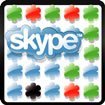
The design highlights the Skype logo and uses plenty of Skype light blue within the ColorCode. Image Credit: ColorZip Japan, Inc.

Unlike a data-heavy bar code, all a Colorzip code communicates when it's scanned is an index, a pathway to content stored on a server. That links the reading device to the desired content which then pops up on the screen.

Even better, the colors can be read at relatively long distances - say, half a meter away and at poor resolutions. Colorzip codes have already been used on TVs, for example, with viewers voting to express their preferences for the outcome of a show. You focus your phone's camera on a splotch of color in the corner of the screen and press the button; you then find yourself at a Web site.

"We're able to put content onto the code to make it attractive," says Christopher Craney, CEO of Colorzip's Japan subsidiary.
----
But who goes to the trouble of carrying around a scanner? The answer: 60 percent of mobile-phone users in South Korea and Japan. Their phones come with Quick Response readers, based on a code
[a 2D code - QR Code invented by DENSO WAVE CORPORATION] that's somewhere between bar codes and the version proposed by Colorzip. With some software from Colorzip, users can zap everything from specially made Colorzip postage stamps issued by the postal service to T shirts or caps marked with jazzy graphics, and be directed to a Web site.

The technology has a drawback. Because the codes can be photographed or copied, they might be susceptible to hacking.
----
But the color codes may presage a day when the combination of user-friendly codes and the Google-sifted Net universe opens up myriad possibilities.
Read All>>

Check out the most powerful 3D/Auto ID "Cubed" code designed to date>>