Showing posts with label Content Idea of Asia. Show all posts

Friday, September 28, 2007

The Image Of A Mobile (phone) World

Japanese commuters while away the journey by watching TV on their mobiles. Image Credit: David Sacks/Getty

The Image Of A Mobile (phone) World

Portable programmable electronic communication devices, which received their birth forty years ago with the release of the T58 & T59 by Texas Instruments, have come a long way and there is no better place in the world than Japan to judge and assess how far.

The key to this evolution comes down to having the handheld cellphone be an on-the-fly, symbology decoding, self-programming computer. A cellphone with a good processor, a camera, a printed symbology (ie. slang: barcode) and a strong infrastructure can deliver more interaction and information than a WiFi internet connection HotSpot on many applications.

The most amazing application that can be delivered through these means is that a person with a properly programmed cellphone can scan a “3D Barcode” (a colorized QR Code) and the phone decodes the image taken with the camera and delivers to the cellphone screen 20 seconds of video communication to the user. That’s right! … 20 seconds of the latest DVD release from “The Bourne Ultimatum” that might help one to decide to buy this DVD gift for Christmas – for example.

PM Code - Colorized QR Code that can deliver a 20 second video to the users phone screen without the need to be hooked-up to a WiFi HotSpot or incur cellphone call minutes. Image Credit: Content Idea of Asia (CIA)

Furthermore, the cellphone user did not have to use the cellphone radio towers or a WiFi Hotspot to have the handheld perform this amazing feat. The 20 seconds of video came directly from the “Barcode” that the user’s phone took a picture of … and decoded to display.

More mobility application news happening in Japan from The Guardian Unlimited -

Why mobile Japan leads the world
A combination of an urban lifestyle and infrastructure advantages mean that the fixed internet is being left behind by the mobile

Michael Fitzpatrick - The Guardian - Thursday, September 27, 2007

Yasuko San is aiming her mobile at a small, square tattoo on paper, clicking a little and peering happily at the result. Her prize? The latest novel written for the mobile, entitled "Teddy". Such serialised novels for mobiles are just the latest phone application that has caught the Japanese imagination, but - apart from neighbouring South Korea - few others.

Those printed square icons, however, made their debut in the UK earlier this month (to promote the DVD of the film 28 Weeks Later). Known as QR (quick read) codes, they have aided Japan's mobile revolution by making it easy to access a web page via mobile. Users can be directed to sites by snapping the codes printed in magazines, posters and even on biscuits.

PM Code Image as captured via the cellphone camera. Image Credit: Content Idea of Asia (CIA)

Mobile subscribers

Their British outing is a full four years behind Japan's adoption. In fact, we lag Japan in nearly every aspect of mobile use - except possibly in annoying other commuters on trains.

Lost in Japan? Let your mobile's GPS guide you. Bored? Download the latest manga comic or an e-book to read on the train, or go shopping and pay by swishing your mobile in front of the till, because the phone is also an electronic wallet.

You can also collect e-coupons, pay bills, play Final Fantasy, update your blog and pay and check into hotels wirelessly. Soon the airport check-in will be history in Japan, too, as the e-ticket in your phone becomes your boarding pass.

Nearly all are services based on the success of the mobile web in Japan, where in a nation of 127 million the number of mobile internet subscribers recently passed 100 million. Not for nothing are the Japanese now known as the Thumb Tribe - a tribe who, for the most part, prefer their mobile to the fixed internet.

Apart from the killer application - email - 80% say they use other functions too. Downloading music is popular (80% have tried it), as is TV for mobile - half of its subscribers use it regularly. Three quarters of users say they enjoy online clothes shopping with their mobile at least once a month. What they are less keen on is video calling: in Japan, as in the UK, 90% say "no thanks, never". And as for using the mobile as a modem - to link to the internet - that's very expensive in Japan.

It is no wonder those touting m-commerce as the next big web thing tell us Japan is the future blueprint. "Japan is the world's high-tech testbed for a wide range of consumer electronic devices and systems - many of which never see the light of day in overseas markets," says Daniel Scuka, keitai guru and consultant for publishers Wireless Watch Japan. "So keeping up with developments here is vital to knowing what's going to hit Europe and the US 24 months in the future; doubly so with respect to mobile and wireless."

By offering the Japanese a multiplicity of services - and, very importantly, some very cool handsets to use them on - the operators have created what every western mobile service provider is dreaming of: a mobile lifestyle culture that keeps millions reaching for the mobile rather than the fixed internet. But it does have its disadvantages.

Most us would feel miffed if we lost or damaged our mobiles. The Japanese would be paralysed without theirs: nearly half of Japanese confess to being obsessed with their mobile phones.

But why is such technology such a hit in Japan and not in other mobile-savvy nations such as Finland? According to the man who kickstarted the trend - the father of i-mode, NTT DoCoMo's Takeshi Natsuno - it is because of the Japanese genius for designing new technologies that can be adopted by anyone, especially techno-phobes. It's not about "bandwidth, nor standards, nor unique Japanese culture", he says. It is about "fun and convenience".
----
Demanding consumers

The Japanese are blessed with some of the best-looking technology in the world. It has to be intuitive, simple and high-quality, not because the Japanese are so tech-savvy, but because they are the most demanding consumers in the world.

According to Scuka, more than 100 new phones hit the Japanese market last year as manufacturers tried out new ideas on the public. Some cultural factors, as with any other country, do play a part in Japan's willingness to take up some technologies such as TV on the mobile.

As in Europe, this was at first a washout, but as watching TV in public becomes more socially acceptable in Japan, the number of subscribers is rising. Au, the second largest mobile network in Japan, recently signed up its five millionth subscriber to the service.
----
It is this urban lifestyle where convenience is the key which has necessitated the rise of the all-in-one mobile plus those very funky handsets. By comparison Apple's iPhone is a mere 2.5G plaything. In Japan, which is already into 3G and heading towards 4G, they make mobiles look good and work hard.
Reference Here>>

Tuesday, November 21, 2006

3D Barcode - Auto ID "CUBED"

It's only a matter of time before the world around you is painted with ColorCodes. Wherever you go, wherever you look -- TV, magazines, store shelves, shopping bags, billboards, web banners, T-shirts and more -- you'll see ColorZip in action. Image Credit: ColorZip Japan, Inc.

3D Barcode - Auto ID "CUBED"

That's digital 2D code "X" axis, "Y" axis, and Color!

To the power of three ... that's what I say! What could be more powerful than a code that incorporates color as one of it's discernments? After all, this is a color world.

QR Code (a registered trademark of DENSO WAVE INCORPORATED) breaks out of it's shell through the introduction of a new automatic identification symbology variant - the ColorCode (ColorCode and ColorZip are registered trademarks of ColorZip Media Inc.).

ColorCode is the name of the first ever "3D Barcode" utilized by a server-based content delivery system known as ColorZip.

At the moment, ColorCode is a closed and managed source code symbology designed for use by Brand Managers and Marketing Communication professionals through ColorZip Media - a flexible, real-time, interactive content management system that provides up-to-the-minute CRM data to the consumer.

So, with the ColorZip system, all a consumer needs to do is point a CCD or CMOS camera (with a minimum 100,000-pixel resolution) at TV screens, print ads, magazines, POP displays, outdoor boards, electronic screens, product packages, web banners, T-shirts, and etc. containing a ColorCode, and decoded information sends the consumer's computer or phone to a web server that, in turn, delivers digital information to the consumer that he can use to be informed or make a decision.

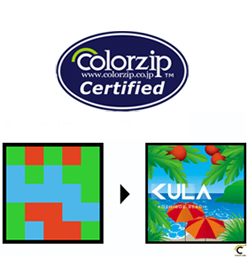
ColorZip Japan now announces [ColorZip Certified Program] to give certificate to our trusted partners and their products. The program is set to find creative design or hardware companies who can cooperate with us to make the ColorCode designs or improve hardware. After thoroughly evaluating creativity, robustness of their product and technology, ColorZip's Partnership is certified and official logo is provided. With the ColorCode, you can appeal your reliability and expand business chances. Image Credit: ColorZip Japan, Inc.

Imagine the possibilities of reaching out to consumers on-the-fly when ColorCodes can be read quickly and easily from a 15 foot distance by mobile phones, Cell PDAs, PCs, and other devices equipped with cameras. Say good-bye to exclusively communicating through one-dimensional print display methodologies.

Excerpts from ColorZip Japan, inc. website -

There's a colorful new world to be explored.

Point your mobile phone at a model in a magazine ad and zip you're visiting her website.

Point your Cell PDA at a music video on TV and zip you've got a sample of the hit single.

Point your cell phone at your favorite team's logo and zip you know the score.
That's the power of ColorZip.

ColorZip works with mobile phones, PC cameras, and other imaging devices that read ColorCodes. Let's say you see a poster for a movie you're interested in. Point your mobile phone at it. The camera in your phone reads a ColorCode printed on the poster. The ColorCode contains information provided by a server. The server then sends data to your phone in the form of content, perhaps a movie trailer. Best of all, it happens instantly, in a zip.


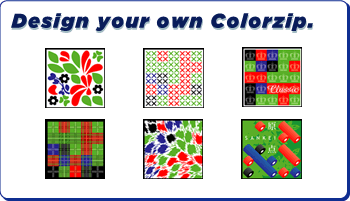
The ColorCode was exhibited at the AUTO-ID EXPO by SATO (printers) held at TOKYO BIG SIGHT. The flower motif ColorCode is for use on flower tags at a florist or nursery. Image Credit: ColorZip Japan, Inc.

Every picture tells a story.

ColorZip also makes watching TV an interactive experience. Suppose you see a product you like on a TV show or commercial. Point your mobile phone at the screen and zip, you can order the product. Perhaps you're watching a TV quiz show. With ColorZip you could play along from home, "answering questions" with your phone and instantly winning prizes.

There are more than 17 billion color patterns available in a 3 mm square code, and in larger codes the possibilities are infinite. Codes can be created in wide variety of shapes, sizes and colors and printed on paper, fabric, glass and other materials. They can appear as corporate and brand logos, designer labels, photos, and virtually anything you can imagine.


It's only a matter of time before the world around you is painted with ColorCodes. Wherever you go, wherever you look -- TV, magazines, store shelves, shopping bags, billboards, web banners, T-shirts and more -- you'll see ColorZip in action.
All you need to do is zip.
Reference Here>>


ColorCodes from Origin through Mobile Site have been designed by the Sankei Co Ltd.'s desingners. The design represents their corporate profile and philosophy. Image(s) Credit: ColorZip Japan, Inc.

Excerpts from Newsweek International via MSNBC early this year-

Using Color Codes To Browse the Web
By Christian Caryl (with B. J. Lee in Seoul) - Newsweek International - Jan. 16, 2006 issue

It's an advertiser's dream. Imagine you're sitting in your favorite cafe when something in the business pages catches your eye. That company you're reading about sounds intriguing. So you take out your mobile phone and focus the camera lens on a small splotch of color embedded in the corner of the article. Suddenly the phone's screen is displaying real-time stock prices and up-to-the-minute company headlines.

It's become a truism that the Internet is transforming the way businesses reach their customers. But among advertisers there's a nagging sense that the online world is still too disconnected from more traditional media, like print. For most users, gaining access to the Internet still means sitting in front of a computer and hammering away at a keyboard - a setup far removed from the experience of reading the morning paper or thumbing through a magazine. Advertisers would instead like to give print readers immediate access to the full range of Web-based information. Colorzip Media, a South Korea-based company, is one of the numerous small firms hoping to bridge this divide.

Colorzip's idea is to build on the pros of bar codes while shedding the cons. The intricate structure of bar codes makes them hard to read; scanners have to be close and precise. And if anything else gets in the way - an ad, for example - the scanner can't cope.


A few years ago Korean computer scientists came up with a new kind of code based on color patterns, which can be easily incorporated into company logos or other graphic designs. Colors are much easier for scanners to read, and they help users home in on the content. Colorzip codes have the added advantage of simplicity.

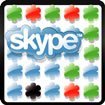
The design highlights the Skype logo and uses plenty of Skype light blue within the ColorCode. Image Credit: ColorZip Japan, Inc.

Unlike a data-heavy bar code, all a Colorzip code communicates when it's scanned is an index, a pathway to content stored on a server. That links the reading device to the desired content which then pops up on the screen.

Even better, the colors can be read at relatively long distances - say, half a meter away and at poor resolutions. Colorzip codes have already been used on TVs, for example, with viewers voting to express their preferences for the outcome of a show. You focus your phone's camera on a splotch of color in the corner of the screen and press the button; you then find yourself at a Web site.

"We're able to put content onto the code to make it attractive," says Christopher Craney, CEO of Colorzip's Japan subsidiary.
----
But who goes to the trouble of carrying around a scanner? The answer: 60 percent of mobile-phone users in South Korea and Japan. Their phones come with Quick Response readers, based on a code
[a 2D code - QR Code invented by DENSO WAVE CORPORATION] that's somewhere between bar codes and the version proposed by Colorzip. With some software from Colorzip, users can zap everything from specially made Colorzip postage stamps issued by the postal service to T shirts or caps marked with jazzy graphics, and be directed to a Web site.

The technology has a drawback. Because the codes can be photographed or copied, they might be susceptible to hacking.
----
But the color codes may presage a day when the combination of user-friendly codes and the Google-sifted Net universe opens up myriad possibilities.
Read All>>

Check out the most powerful 3D/Auto ID "Cubed" code designed to date>>