Thursday, October 05, 2006

Movie Tickets For The 21st Century "Mobility" World

MBO is proud to be launching at Emagine Theaters as they always seek to provide you the best experience in theater entertainment. That is why they are the first in offering you the convenience of MBO (trademark). The future is in your hands... Stay Tuned! Image Credit: Mobile Box Office

Movie Tickets For The 21st Century "Mobility" World

There was a time one had to go to the theater and stand in line to buy a ticket to see a movie.

Then along came the era where virtually every home had a computer where one would log-on, buy a ticket, go to theater and find the kiosk that one could retrieve the ticket with the insertion of a credit card. There are some of us who are still just getting the hang of this process.

Well, let's get used to the future. Today, we all would feel lost without a cellphone. We feel naked if we left home and forgot to bring along our phone. What if the cellphone we carried could buy tickets via a phonecall to the theater, and then we never had to stand in any line anywhere to get a ticket? How about if one would just have to show up with the phone they purchased the ticket with ... and have the screen scanned by the usher and you're in!?

Excerpts from the Film Journal International -

MOBILE MANIA
By Doris Toumarkine - FJI-VNU - Sep. 21, 2006

Made in Europe and Asia, but made for America?

In yet another example of innovative entertainment products, services, amenities and ideas incubating and flourishing overseas before finding their way stateside, mobile movie ticketing (m-ticketing) that turns cell-phones into bar-coded movie tickets has just arrived. Just maybe, such ticketing - different from printing tickets on home computers or retrieving them at theatres or their kiosks - will become as American as adopted leisure imports like rock videos, neon, anime, discotheques, reality shows, wine bars and even great coffee at every corner.

At least Michigan-based Emagine Entertainment, an exhibitor that operates 46 screens in three locations, thinks so. Last January, Emagine announced an agreement for the first of their three theatres with Michigan-based MobilRelay's
Mobile Box Office (MBO), the only service that allows U.S. moviegoers to use mobile phones as tickets.

The barcode-based MBO service, initially begun for all shows at the 18-screen Emagine Canton, is now available at the 18-screen Emagine Novi Theatre. Chris Brandt, VP of operations for Emagine, expects an imminent rollout to a third venue, the ten-screen Hollywood Cinema in mid-Michigan.

MBO initiated their barcode-based software in the two theatres and, after glitches were fixed following the first rollout, the service is running smoothly. It goes something like this: All that cell-phone users need on their devices are color screens (for the color branding that MBO provides for its business customers) and web access. To order tickets to any Emagine show, filmgoers use their cells to go to MBO's mbo.com website, where they order tickets and, as in ordering tickets online or over the phone, supply credit card information. Once all is approved and confirmed, customers receive a confirmation barcode on their cell display that is later read by a scanner operated by theatre personnel at the theatre's entry point. The whole point of m-ticketing is to allow filmgoers to bypass the box-office lines or the wait at kiosks. Filmgoers love the convenience; exhibitors love the extra time filmgoers have to buy concessions.

Says Emagine's Brandt, "It all works smoothly, provided the filmgoer has pulled up the appropriate screen [with the barcode]. Otherwise, it can take time for whoever's manning the scanner to find the barcode, as [cell-phone] devices or services can vary." He adds that it's important that theatre personnel be properly trained on the scanner - although the procedure is not difficult - and that these personnel are used efficiently. For instance, getting managers during off-peak to deal with the scanners can take extra time.

For maximum efficiency, Brandt says the solution is to get ushers on the scanners. And those ushers must also be savvy enough to help customers find their ticket barcodes on their phones. The variety of carriers and devices doesn't make this easier.

Brandt explains that Emagine has about 20 ushers at each theatre and, thanks to ease of use, they can all master the scanners. "The trick is to be able to get the tickets up on the cell-phone screens. Sometimes our customers need a little training in retrieving the barcodes from the website, but once it's up on their screens, it's easy. For customers to arrive at entry points with that done is so helpful. And once they've gone through the e-ticketing process smoothly, they love it. It's about convenience, the fact that they can bypass a line of people at the box office."
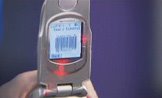

Color LCD screen with barcode that can be read by ushers. Image Credit: Mobile Box Office

Variety aside, even the march of technology itself can present a problem: "Because some of the newer [device] screens are so small, MBO had to switch from 12-number barcodes to ten so that they would fit," says Brandt.
----
Emagine works with MBO in their aggressive marketing campaign to promote the m-ticketing service. The tagline - "What can your phone do?" - is at the heart of the campaign, which involves both in-theatre advertising and outside promotions.

In-theatre, Emagine features MBO-produced m-ticketing commercials during their pre-shows. Says Brandt, "These are full-motion videos, not slide shows. There are also MBO posters in front of the box office, plus MBO has reps at the theatres Friday and Saturday nights promoting the service by handing out cards."
----
Predictably, the primary MBO users are young adults, not kids, aged 18 to 30, who also comprise the main filmgoing demographic. Explains Brandt, 'This more or less also mirrors the 12 to 24 year-olds, that segment of the population that uses their cell-phones for so many things, especially texting. Many seniors use cells, but they'd never dream of using MBO."

Yet m-ticketing marketers may soon be calling all seniors: Seniors, unlike many teens, have credit cards and, for now, m-ticketing requires credit card payment.

Like its users, MBO's service is young and has a way to go in terms of amassing new customers. Brandt says that the percentage of tickets sold through MBO in July was about one percent, but points out that that percentage doesn't look so weak, considering July attendance at the two MBO-powered theatres was about 175,000.

Even the entrenched online movie ticket services don't do a whole lot better. The New York Times recently reported that for the non-blockbuster films, only about five percent or less of total tickets sold are through these established online services.
----
In Europe, Asia and Oceania, music and sports fans have been using their mobile phones as tickets to music and sports events for several years; more recently, m-ticketing for movies has become the latest phenomenon.


As Brandt says, "Europe is light years ahead of us with this [m-ticketing] thing." Much of this overseas maturity has to do with the fact that these other markets have been way ahead of the U.S. with regard to cell-phone use and text messaging. But there are signs that the U.S. is catching up.

According to Verizon Wireless spokesperson Brenda Rainey, the carrier, one of the country's biggest, already has 54.8 million customers, with many of these responsible for the 12 billion text messages that were exchanged during the second quarter of this year. For the same quarter, 232 million picture messages were sent over Verizon.

All Verizon Wireless phones are capable of text messaging and all camera phones can send and receive picture messages, so barcodes will travel easily. And, at ten cents per text message, texting - done mostly by the young and shallow-pocketed - is cheap. Even picture messaging is only 25 cents to send or receive. And subscribers to this messaging service, mainly kids, get a deal via bundled packages, although Verizon also has a pay-as-you-go program for those who text less frequently.
----
But just as technology gives, it also takes a little away, especially when it comes to the challenge of different markets and different devices embracing different formats. There are several kinds of text messages used worldwide, upon which m-ticketing is dependent. These are SMS (short message service), which is actually a binary service and is the simplest. There's also MMS (multimedia sending) and the more obscure EMS. All are pushed through the Net by WAP (Wireless Application Protocol).

EMS, which stands for Enhanced Messaging Service, is an extension of SMS on several networks. A collaboration of such device manufacturers as Ericsson and Motorola, it handles messages that can be displayed as SMS transmissions. But phones that are not EMS-enabled won't be able to deliver EMS' special text formatting (such as bold or italic) or its images and sounds.
----
But the U.S. presents a different situation. He continues: "Carriers in the U.S. have generally chosen not to support binary SMS, so they are primarily delivering with a mix of MMS and WAP push. In Canada, it's a mix of all three. But whatever the kind of message, the user experience is very similar. A message arrives on the cell-phone, you open it, the ticket is displayed and this same ticket gets scanned for event access."


Paradoxically, as Cameron has it, the U.S. is both behind and ahead. M-ticketing may just be getting its start here, but "the U.S. is jumping beyond SMS, which is what has really caught on in Europe and Asia, and embracing MMS/WAP."
----
And MBO has "imagined" growing its business beyond Emagine. "We're talking to a very big national chain right now and we'll probably announce that launch in a month or two. It will be in one or two theatres in Texas and will precede a monthly rollout."
----
Hopefully, being an early adopter of m-ticketing will also pay off, but it's ultimately just about selling tickets, stupid! Declares Brandt, "I couldn't care less where [customers] buy tickets, as long as they buy."

Beyond short lines, long lines and online, there's that all-important bottom line. Says Brandt, hitting a metaphorical pause button as m-ticketing rages on: "Ultimately, the future of the theatre business will depend on the quality of films, no matter where the technology takes you."

Which doesn't mean a soft focus on where that might be. Brandt asserts, "I think we'll see that MBO is at the right place at the right time."

Read All>>

Friday, September 29, 2006

Best ID Security May Not Be Just Biometric

Entrust IdentityGuard is carried or worn around the neck of the individual. Image Credit: Entrust, Inc. via Avisian publications

Best ID Security May Not Be Just Biometric

Specific identification of an individual short of a DNA make-up can be achieved through many identification processes. A large investment has been made in systems based on biometric access, radio based proximity information exchange, and video software that can recognize individuals through data mining identifiers associated with ones face ... or body type.

Maybe the best identification solution to implement can also be one of the simplest. Maybe the easiest way to insure the identification of an individual is to rely on a two step authentication process that requires the individual, after entering a password, to interact with the process via a matrix matching grid that uses the individual's brain.

Oh, and by the way, this security solution is inexpensive and simple to implement.

Excerpts from CR80News -

Grid-based two-factor authentication comes to campus cards
Sweden’s Goteborg University deploys a visual challenge and response solution from Entrust
By Andy Williams, Contributing Editor, CR80News - Monday, September 25 2006


You log in with your password, then you're met with another screen with the following: A3, F4, J5. No, you're not playing Bingo. It's part of an authentication system created by Dallas, Texas-based Entrust. To supply the correct answers to A3, F4 and J5, you need a grid supplied by the company. It's a security solution that one Swedish university has chosen to protect its student records.

Entrust IdentityGuard "X-Y" matrix grid pad. Image Credit: Entrust, Inc. via Avisian publications

"Grid authentication is about an X-Y coordinate lookup system," said Steve Neville, senior manager of ID products and solutions for Entrust, Inc. a secure digital identity provider. "It's like reading a map and it's about being able to respond to the random challenges of a coordinate on a grid."

To help prevent attacks on student data and protect the records of its 60,000 students and faculty while facilitating access for authorized parties, Goteborg University in Sweden recently implemented Entrust's IdentityGuard.
----
A cost-conscious option for multi-factor authentication

The two-factor authentication system requires a password, plus the grid that's often printed on the back of a student's or faculty member's identification card, said Mr. Neville. It's a standard student card that's usable not only for identification but for other things, like accessing foodservice.
----
Either way, the grid is useless without the password and the password useless without the grid. The grid is the 'something you have' and the password is the 'something you know' in the multi-factor authentication scenario.
----
"We wanted an authentication solution that would provide strong security but also would be easy to use for our students and faculty and also be economical to manage," said Sven-Elof Kristenson, IT manager at Goteborg University. "Because we can combine the Entrust IdentityGuard grid authentication capability with the identity cards we already issue to our students and faculty at the beginning of the school term, it fit seamlessly into our existing system and will give us the ability to make even more services available online for everyone."

The university also chose IdentityGuard because its grid authentication capability can be used to access records, file storage, reports, e-mail and calendar functions, said Mr. Neville. "It was a natural choice for stronger authentication. Ease of integration and usability also were factors that led to the decision to implement Entrust IdentityGuard."

Entrust IdentityGuard matrix grid pad information as it is applied to a computer log-in screen. Image Credit: Entrust, Inc. via Avisian publications

Adding 'machine fingerprinting' to the grid authentication

"ID Guard in and of itself is a platform for authentication," said Mr. Neville. It comes in six different flavors-authentication options --- ranging from the non-intrusive like machine fingerprinting and grid authentication to one-time password tokens, he added.

"One of the reasons Goteborg liked grid authentication is that it also delivers the flexibility to input other types of authentication. Inside our license model we don't force them to track which authentication they're using. They can choose which ones they want to use to protect student data," said Mr. Neville.

A risk can be assigned to student data to determine the type of authentication needed, he added. "It can be a simple process, like this type of information requires the grid and machine authentication. For students, the grid is totally fine because they're roaming around," said Mr. Neville.

ID Guard is a "software server based product that can also provide strong authentication for remote access," he added.
----
"When they (Goteborg University officials) were looking at security solutions, they were very sensitive to cost and how much change would be required. They looked at ID Guard as a very attractive solution versus one that could only be deployed to faculty alone because of the cost. It was also something they found very unique and something they could trust."

Read All>>
Wednesday, September 27, 2006

Realizing The Convergence Of Auto ID And Cellphone Technologies

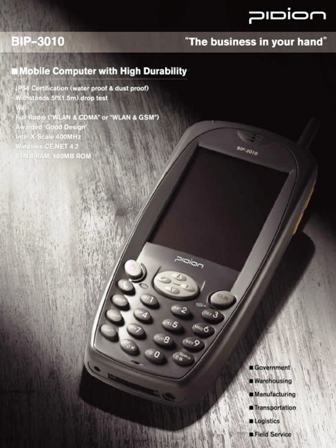
The PIDION BIP-3010 Series Mobility solution. Features high durable design, full radio (CDMA, GSM, WAN), pistol grip option, and more. Image Credit: Daewoo

Realizing The Convergence Of Auto ID And Cellphone Technologies

Last week, Motorola agreed to purchase the automatic identification industry leading manufacturer Symbol Technologies.

It was only a matter of time where a major manufacturer and player in the mobility communications world sought to control, influence, and participate in the communication technologies that aid in retail transactions, warehousing, work-in-progress manufacturing, CRM (customer relations management), asset inventory management, supply chain efficiencies, and etc.

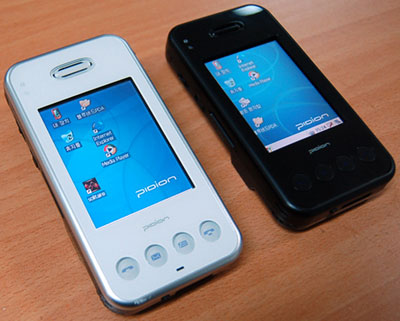
The PIDION BM-200 Series Image Credit: Daewoo

Throughout this last year, manufacturers from "Pacific Rim" manufacturing countries have begun to introduce handheld mobility solutions that incorporate functions that combine CDMA communications (cellphone), MicroSoft CE OS (best for PDA style touchscreen data collectors), PoS applications hardware (on-board printer, card swipe, and etc.), RFID sensors, 2D scanners (to read LCD screens for cellphone transaction verification), and more.

One company effort is marketed here in North America by Daewoo (more commonly known for automobile manufacturing). A major conglomerate business located in South Korea, Daewoo is introducing mobility solutions manufactured under the name of Pidion that combine many of the configurations and functionalities mentioned above.

The PIDION BM-1200 Series Image Credit: Daewoo

With the manufacturing innovation push seen from the Pacific Rim, this announcement now puts the introduction of these platforms into more of a catch up/partner up mode.

This from RIS News -

Motorola to Acquire Symbol Technologies
RIS News and Edgell Communications

Motorola and Symbol Technologies have signed a definitive merger agreement, under which Motorola has agreed to acquire all of the outstanding shares of Symbol for $15 per share in cash. The transaction has a total equity value of approximately $3.9 billion on a fully-diluted basis. As of June 30, 2006, Symbol had approximately $200 million of net cash. Upon completion of the transaction, Symbol will become a wholly owned subsidiary of Motorola. The acquisition is subject to customary regulatory approval and the approval of Symbol's stockholders, and is expected to be completed in late 2006 or early 2007.

In acquiring Symbol, which has the tag line "The Enterprise Mobility Company", Motorola is buying a business that includes wireless technologies, mobile computing, Radio Frequency Identification (RFID), and scanner technology commonly found in retail checkout counters. Symbol brings to Motorola more than 900 patents and thousands of enterprise customers.

Industry analysts weigh in on the acquisition:

Rob Garf, AMR Research: This one will shake up the market a bit. Having Symbol team up with Motorola gives the combined company the ability to tap into the cell phone market, and almost every U.S. consumer has a cell phone. Until now, the role of personal shopping assistant has been somewhat slow to take hold. On day one, this new company will have at its disposal a critical mass of users of this type of technology. Look at some of the retailers who have invested in handhelds - they have had to take on the capital costs, but now can rely on the consumer for the capital costs.

Greg Buzek, IHL Consulting: This acquisition finally brings credibility to the discussion of mobile commerce. Symbol has owned many patents in the area of scan engines and particularly small ones. They have had a history of vigorously defending and litigating those patents in the past to the point that many vendors have been unwilling to work with them. When it comes to mobile commerce, no single vendor has had all the pieces and Symbol had the missing scanner piece. With Motorola purchasing Symbol, mobile commerce and just mobility in all facets will take a strong step forward.

Bud Wagner, CSC Consulting Group: All in all, this acquisition promises to push RFID to the next level as retail and consumer product companies find creative ways to leverage the technology. This could become a powerful tool in optimizing an item's sell-through by having the right product in the right place at the right time.

Eric Austvold, AMR Research: This acquisition will inevitably trigger further consolidation as the likes of Nokia, Ericsson, and others look to snap up someone like Intermec, a Symbol competitor. Standing alone in this market just became unattractive. Motorola benefits from the timing. By acquiring an early RFID pioneer like Symbol, Motorola gets the benefit of Symbol's experience without the pain of initial investment. It also creates an opportunity to grow business from new enterprise customers by aligning with carrier partners like Cingular, AT&T, Verizon, or Sprint to provide new possibilities for mobile computing.

Reference Here>>

To match up with the access this aquisition provides, all the Daewoo PIDION is going to need is to develop a relationship with a cellphone service carrier partner ... or two ... or.

Thursday, September 21, 2006

Exciting USB Power Innovation For Mobility Applications

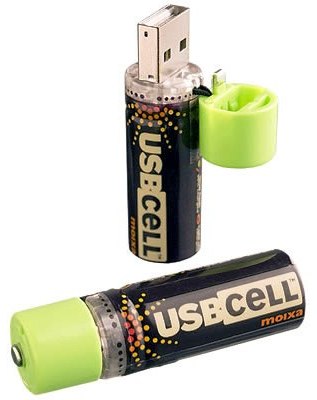
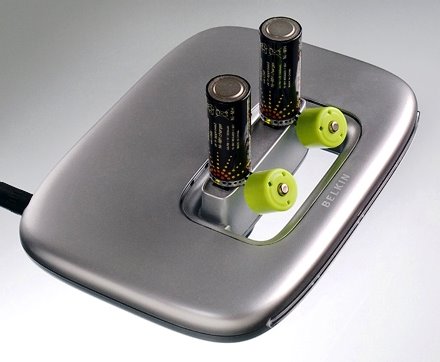
Introducing our revolutionary new rechargeable battery - the USBCELL. Image Credit: Moixa Energy

Exciting USB Power Innovation For Mobility Applications

In the world of portable data collection and business mobility applications, one of the most vexing problems comes down to Ni-Cad or NiMH battery management schemes (will one have the power to do and complete the job at "hand").

An innovation that is simple but brilliant has just been introduced in England and, hopefully soon, to be available here in North America.

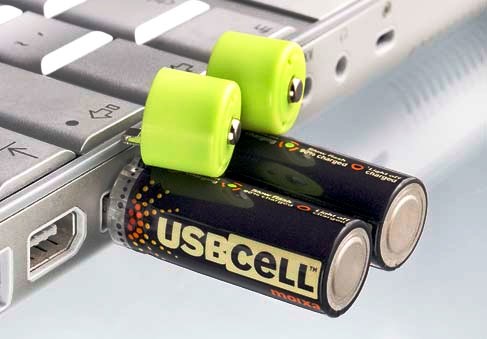
This NiMH AA cell can be used like a normal battery and can be recharged simply by plugging into a USB port. Image Credit: Moixa Energy

Batteries that recharge directly from the powered USB port of any properly port equipped computer.

Excerpts from Trusted Reviews -

USBCELL: Batteries That Recharge Through USB
Author: Gordon Kelly, Trusted Reviews - Published 20th September 2006

I love innovation - who doesn't? That said, my tastes lie specifically in the kind which make my life simpler and easier. We're talking email over post, wireless over wired, LCD over CRT and potentially now 'USBCELL' batteries over your traditional AAs.

Produced by Moixa Energy, USBCELL batteries are simply batteries that recharge from any USB port. They require no separate recharging devices, cradles or cables and can be used exactly like a normal battery. The design itself is rather like a typical memory stick with its flip top lid and they could be set to deliver the same killer blow to the battery market that memory sticks did to floppy discs.

At this stage the one unknown is how well they perform when compared to their established counterparts and how long they take to charge. The new wave is coming, however, and though they launch in the familiar AA they will soon comprise a full range of standard formats including phone and camera batteries and come with C & D size converters.

Available now and costing just 12.99 British Pounds
[ed. approximately $24.50] for two AA USBCELL batteries (including VAT and delivery from the company's website) I'm forced to say something I never thought would pass my lips: I'm quite excited about batteries.
Reference Here>>


After careful review of the manufacturer's website, here are a few Frequently Asked Questions that should help to fill in some of the understanding of this new and exciting portable equipment power innovation.

User Instructions FAQs

How long do USBCELLs take to charge through a USB port?

USBCELL will charge in about 5 hours to 90% charged, or less if the battery was not fully drained, and then enter a trickle charge mode (LED flashing). The LED will go off after this.

Can USBCELL's be charged in NiMH battery chargers?

Yes. USBCELLs can be charged in any good quality overnight or quick (5-7 hour) battery chargers designed for Nickel Metal Hydride (NiMH) batteries. The recommended charge is 250mA for 7 hours. Consult your NiMH charger manual to confirm suitability. With the cap on, they work just like a normal rechargeable NiMH battery as the circuitry is bypassed. Do not use fast chargers which claim to take less than 1 to 2 hours.

Will USBCELLs suffer from the 'memory' effect?

Rechargeable cells can be recharged hundreds of times but the lifetime will reduce slightly if cells are always partially charged or topped up. The User Guide gives instructions for how to prolong USBCELLs life and maintain best performance. However, since USBCELL is capable of several hundred charges, occasional top-ups when you need urgent power will not have a significant effect.

Can the USBCELL be used in devices that normally take 1.5V (alkaline) throw-away batteries?

Yes, USBCELLs, like other rechargeable cells, should work with almost all AA-powered devices.

Example of consumer electronic devices using AA cells. Any portable data collector or hand held computer that can use AA cells can benefit from USBCELL solutions. Image Credit: Moixa Energy

Do USBCELLs require drivers to work with my computer?

No, USBCELLs draw power from the USB socket and do not need any special drivers to charge.

Can I use fast chargers to charge USBCELLs?

USBCELLs should not be used with any charger rated at a current above 600mA. In general USBCELLs should not be charged by any charger that has a charge time of less than 2 hours.

Is USBCELL faster to charge than normal rechargable batteries?

USBCELL takes about 5 hours to charge, this is normally classed as fast charging. They will charge in the same time as other rechargeable batteries of the same capacity in a normal NiMH charger.

Top-Up - Charging for just a few minutes provides extra hours of instant use for most input devices. Adaptors soon for C and D cells. Image Credit: Moixa Energy

Does the USBCELL last as long as other rechargeable batteries?

The capacity of USBCELL is 1300mAH - this is greater than some ordinary NiCd and NiMH batteries. Some new high-capacity NiMH batteries can go up to 2500mAH. However, with USBCELL you can simply recharge or top-up by plugging into a USB port rather than going off to find a wall charger and adaptor. Also, make sure that the battery is fully charged - the charge should take about 5 hours by USB and the light should go off when USBCELL is fully charged.

Does the type of USB port matter?

Most USB ports are 'powered' and capable of providing up to 500mA current at 5 volts (USBCELL should draw about half of this maximum current). Because of the AA size of USBCELL, it may be difficult to insert into some inaccessible or recessed USB ports. If it's difficult to insert, don't force it!

Can I charge from a USB hub?

USBCELLs can be charged in most powered USB hubs. These should be connected to an external power supply during use. In some powered hubs, USBCELLS can be charged even without the connection to a PC, provided that the power is connected. Some USB hubs are not separately powered, and so these may not provide enough power to each socket. If you do need to use an unpowered hub, we recommend that only one USBCELL is charged at one time, with no other high-power peripherals connected.

Recharge in Powered Hubs - Multicell charging in Hub. Image Credit: Moixa Energy

How do I know my USBCELL is charged, when charging in a USB port?

A small LED light at the USB plug end of each USBCELL indicates that it is charging. If the cell is already charged the LED should start flashing within 15-25 minutes and stop after a further 10 minutes of top-up charge. If the cell is less charged, the LED will stay on and the battery will continue charging until full charge is detected at which point the LED will flash for 10 minutes. If the USBCELL was fully discharged it will charge for 5 hours and then trickle charge for 90 minutes. When the LED switches off then the USBCELL is fully charged. Batteries get warm during charging, to a peak temperature when fully charged. It is therefore not recommended that you recharge batteries immediately after charging. Batteries should always be charged at room temperature.
Reference Here>>

Tuesday, September 19, 2006

The Cannon That Will Sink The Ships Of DVD Piracy - Embedded RFID

Johnny Depp portrays character 'Captain Jack Sparrow' in a scene from the film 'Pirates of the Caribbean: Dead Man's Chest' in this undated publicity photograph. Image Credit: REUTERS/Peter Mountain/Disney Enterprises/Handout

The Cannon That Will Sink The Ships Of DVD Piracy - Embedded RFID

"Avast ye, you soil-licking varmints." ("Hello"), today - September 19, 2006 - is "Talk Like a Pirate Day" throughout North America so says talklikeapirateday.com.

TLAPD was founded by John Baur and Mark Summers during a raquetball game and Talk Like a Pirate Day has taken the world by storm. The thing just sort of grew, and then took off in 2002 when Pulitzer Prize-winning columnist Dave Barry got wind of it and wrote about it in his Miami Herald Column. (HT: talklikeapirateday.com)

Yar, but I digress! Aye, piratin'o' music and mo'ie D'd's has been a real problem throughout the world. Gar, Where can I find a bottle o'rum?

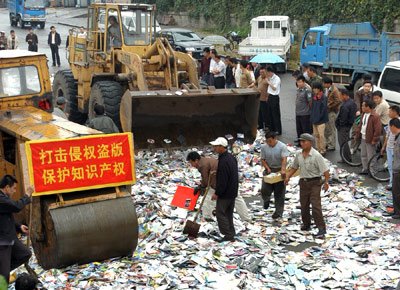
Just yesterday, it was reported that Chinese police and copyright officials have raided 537,000 illegal publication markets and distributors in major cities such as Beijing, Shanghai, Tianjin and Liaoning Province.

Arrr, these operations seized 13 million pirated D'd's. Aye, me parrot concurs (these operations seized 13 million in pirated DVD's).

About 500,000 pirated CDs and DVDs are destroyed during a recent crackdown on pirated audio and video products in Shenyang, capital of Northeast China's Liaoning Province. Image Credit: China Daily

Arrr, technology rides t' the rescue with embedded RFID. A pence for an old man o'de sea?

Excerpts from VNU Net -

DVD chips 'to kill illegal copying'
Embedded radio transmitter chips to track movie, music and software discs
Simon Burns in Taipei, vnunet.com 15 Sep 2006

DVDs will soon be tracked with embedded radio transmitter chips to prevent copying and piracy, according to the company which makes movie discs for
Warner, Disney, Fox and other major studios.

The technology, which can also be used for Blu-Ray and HD-DVD discs, will allow movie studios to remotely track individual discs as they travel from factories to retail shelves to consumers' homes.

Home DVD players will eventually be able to check on the chip embedded in a disc, and refuse to play discs which are copied or played in the 'wrong' geographical region, the companies behind the technology expect.

"This technology holds the potential to protect the intellectual property of music companies, film studios, gaming and software developers worldwide," said Gordon Yeh, chief executive of
Ritek Corporation.

Ritek is the world's largest DVD maker, and its
U-Tech subsidiary will make the discs.
U-Tech and
IPICO, the company behind the RFID chips used in the discs, announced today that production of the 'chipped' DVDs will begin at U-Tech's main plant in Taiwan.

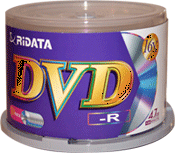
DVD-R is a high capacity optical disc, which is ideal for high volume data recording, archiving and playback. RIDATA DVD-R ensures high durability and reliability for a variety of recording situations, making it a versatile storage solution. Image Credit: RITEK USA/Advanced Media Inc.

U-Tech's global network of factories stamps out some 500 million pre-recorded DVDs and CDs a month for major movie studios, recording studios and video games companies.

After ironing out bugs in the manufacturing process, U-Tech will work with major movie studios on a large-scale test of an RFID-based supply chain management process at its manufacturing plant and distribution centre in Australia.

RFID readers will then be built-in to home DVD players to extend the anti-copying technology into homes as part of a digital rights management system.

U-Tech described this as the "real end game" for the chip-on-disc technology, which would "eliminate optical disc piracy in the entertainment and IT sectors".

IPICO claims that its RFID tags can be read from at least six metres away, and at a rate of thousands of tags per minute. The passive chips require no battery, as they are powered by the energy in radio waves from the RFID reader.
Read All>>

Ahoy, this would effecti'ely put an end t' pirate production o D'd's as we know them. Aye, me parrot concurs - (this would effectively put an end to pirate DVD's as we know them).


Wednesday, September 06, 2006

Tech Strategies: Security Lags As Shoplifting Soars

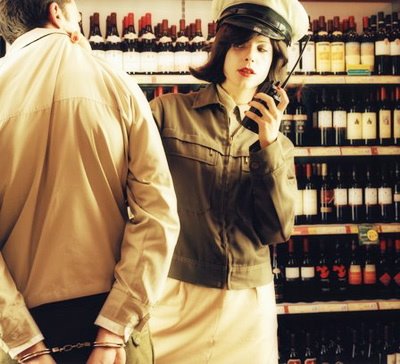
Shoplifting has gone professional. Retailers report recent growth in organized retail crime, where professional theft rings steal merchandise in large quantities. These thieves target pricey items with high resale value such as designer apparel, newly released DVDs, and popular cosmetics. And they're stealing more than you'd guess: The average dollar loss per shoplifting incident has risen from $622 in 2004 to $855 in 2005. Image Credit: BusinessWeek

"Gross-Inflation" is hitting the shoplifting industry by as much as 37% in average dollar loss per theft over this last measurable year. With rings of professional shoplifters, some with ties to funding Islamo-Fascist terror networks, the retail establishment (and, thereby, the consumer) is under assualt.

Security system designers, value-added resellers and Information Technology integrators respond to retailers requests for heightened security with an array of high-technology tools to thwart this major threat to their (and our) shopping environment.

Excerpts from BusinessWeek -

Attention, Shoplifters
With $30 billion in theft, there's a revolution in surveillance systems
By Elizabeth Woyke - BusinessWeek - Issued for 9-11-2006


There are 6 million video cameras mounted in stores across the U.S., according to market researcher J.P. Freeman Co. Their unblinking eyes are everywhere, watching exits and peering down aisles. You already knew that. But you probably had no idea how smart some of these cameras are getting.

Some Macy's (
FD ), CVS (CVS ), and Babies 'R' Us stores have installed a system called the Video Investigator, whose advanced surveillance software can compare a shopper's movements between video images and recognize unusual activity. Remove 10 items from a shelf at once, for instance, or open a case that's normally kept closed and locked, and the system alerts guards sitting in a back room -- or pacing the sales floor -- with a chime or flashing screen. The system can predict where a shoplifter is likely to hide (at the ends of aisles, behind floor displays). A search function spots sudden movement that might indicate a large spill, prompting workers to clean up before it leads to a slip-and-fall accident and a costly lawsuit. And if someone opens a back door at 2 a.m., the system will record who sneaked in and link it with snapshots of the previous and next persons to use the door. Alerts, complete with images, can be sent to handheld devices, keeping retailers informed 24/7, says Jumbi Edulbehram, vice-president for strategic marketing at IntelliVid Corp., a Cambridge (Mass.) firm that makes the Video Investigator system.

Store managers these days need all the high-tech help they can get. Increasingly, they're under assault from organized gangs of professional shoplifters. These skilled thieves walk off with huge amounts of selected items and resell them at discounts. The pros are driving up losses dramatically, to $855 per shoplifting incident last year, from $265 in 2003, according to a survey by the University of Florida's Center for Studies in Criminology and Law. All told, stores lost $30 billion to shoplifting and employee theft in 2005.

To fight back, store chains are embedding smarter devices everywhere, from checkout stands to shelves to places you wouldn't even think of (and can't see). At the same time, more of these systems are talking to each other, sharing data about shoppers and employees alike.

INVISIBLE DETECTIVES

Even the lowly shopping cart has been recruited in the war on retail crime. A surprisingly common -- and simple -- scam is the "push out," in which thieves load up carts and just dash out of the store. The solution: Gatekeeper Systems Inc. (
GKR ), in Irvine, Calif., invented an electric-fence technology for carts. The system, called GS2, uses radio frequency identification (RFID) chips, which are embedded in cart wheels, and antennas around the periphery of the store that broadcast signals to the chips. When a cart approaches the store boundary, its wheels lock up. They can be unlocked only by an employee who activates a remote-control device. "[Thieves] can't push the cart," says Brett Osterfeld, Gatekeeper's vice-president for sales and marketing. "They'd have to pick it up and walk with it." Target Corp. (TGT ) and several smaller chains have signed on.

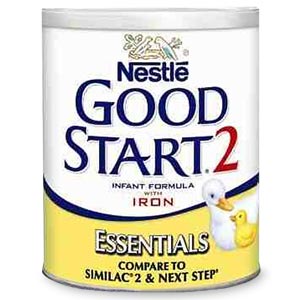
To thieves, infant formula is "gold in a can;" relatively expensive and easy to resell on the street. Other "hot" items at supermarkets include batteries, film, and disposable cameras. Image Credit: NestlƩ USA

Those handy rungs underneath the cart are great for hauling bulky items like diapers, pet food, and beer. The problem for retailers is that shoppers often "forget" to pay for the goods. The answer? Seven grocery chains, including Pathmark Stores (PTMK ) and Giant Eagle, recently began testing LaneHawk, a system by Evolution Robotics Retail Inc. that uses visual pattern recognition to spot hidden packages. Cameras mounted in cashier stands about six inches off the ground scrutinize the bottom racks of passing carts. If an item matches an image in a database, the system computes the price of the product and adds it to the customer's bill. "It's like biometrics for packages," says Alec Hudnut, CEO of Evolution Robotics Retail.
----
Still, a few chains, including Best Buy Co. and (
BBY ) Tesco Corp. (TESOF ), are testing RFID's ability to monitor oft-stolen items like DVDs, jewelry, and apparel. Those chains have experimented with TrueVUE, a system by VUE Technology Inc. that uses antennas placed under a shelf's laminated surface to communicate with RFID tags on merchandise. Store employees could also wave RFID-reading wands over racks of clothes to see which items have moved. "The program wakes up the tags, which send back their serial numbers, in effect saying, 'I'm here,"' explains VUE CEO Robert Locke. EAS tags only activate when they approach a store exit, but RFID-equipped smart shelves can notify security the minute a large number of items move.

No part of a store churns out more data than cash registers. This is also where employee theft is most likely to pop up. New types of transaction-monitoring software pull information from registers into a central database and look for unusual patterns. An excess of manually entered credit-card numbers could be a sign that employees are stealing customers' information. Returns of the same type of sweater 10 times in a row at one register, for instance, could indicate that an employee is processing fake returns for a friend or being conned into making fraudulent returns. Retailers decide what to track and how often, and set parameters for alerts. Often the feedback points to problems other than dishonesty. "It might be a hardware issue or a sign that an employee needs more training," says Cheryl Blake, a vice-president at Aspect Loss Prevention, which works with Children's Place Retail Stores Inc. (
PLCE ) and Ross Stores Inc. (ROST ) "Whatever it is, the transactions will stick out and tip off management to investigate."
----
"Retailers can pull data from all these systems, look at them together and connect the dots," says Rob Garf, a research director at AMR Research.

The newest retail data-mining programs also sync up with video to permit a more comprehensive look at activity at cash registers. With the press of a button, managers can highlight irregular register transactions on their computers and pull up corresponding video. This could enable them to catch cashiers who cut deals for their friends or pocket cash refunds themselves. It could also curtail fraudulent returns by tracking the route customers take to the customer service desk -- do they head straight there or meander through the store, picking up their "return" merchandise along the way?

MUM'S THE WORD

Despite this revolution in retail tech, you won't find many stores bragging about their new security tools. No one wants to tip off shoplifters or advertise that they suspect their customers. That's why so much of the technology is hidden in the first place. But another reason stores don't talk much about surveillance is that they know it sparks concerns about privacy. Consumer groups and legislators have opposed the spread of RFID and video surveillance for just that reason. "Item-level RFID creates privacy and security problems that are unacceptable, even for antitheft purposes," says Dr. Katherine Albrecht, founder and director of Consumers Against Supermarket Privacy Invasion and Numbering.
----
If every retail chain is not yet sold on the benefits of relying so much on chips and software to patrol store aisles, experts still believe the industry will keep moving toward ever-smarter, ever-more-networked tracking systems. The number of video cameras installed in stores is expected to grow by 20% over the next year, according to J.P. Freeman. "It won't be long before retailers link their store data to crime reports and statistical analysis to predict losses... and deploy the right technology and people to stop them," says LaRocca of the National Retail Federation. Already, tech startups are working on even more promising -- or intimidating -- systems to track customers through the entire shopping process. There's even talk of stores installing facial recognition programs and license plate readers to catch repeat offenders.

You're not likely to notice much of a difference at your favorite shopping haunts. But make no mistake -- they're noticing you.

Read All>>

... And thank GOD they are.

Friday, September 01, 2006

The Consumer & Retail Economics Of EFT

Image Credit: WESCO "Your Neighborhood Store"

The Consumer & Retail Economics Of EFT

At WESCO, a regional convenience store chain in Michigan, Electronic Funds Transfer (EFT) service charges greatly effect consumer fuel purchases at the pump.

The 51 store operation processes approximately 2.5 million transactions per month, with more than 70 percent charged to Visa and Mastercard EFT (debit and credit) cards, which both carry costly transaction fees.

In an effort to keep and gain customers as well as make the fuel operation a little more profitable, WESCO puts smiles at the pump by combining its own branded debit card with a consumer loyalty program that automatically discounts gas prices at the time of the fuel purchase.

Excerpts from the American Banker via Cardinal VC -

Debitman Issuer Offers Gas Discount Incentive
By American Banker - 08/22/2006

WASHINGTON -- Debitman Card Inc. said Monday that it has signed a new merchant issuer for its payment cards, the fuel and convenience store operator Wesco Inc.

Wesco began offering the Debitman cards under its own brand this month at its 51 Michigan locations. The Muskegon, Mich., company is promoting the PIN debit cards with a program that knocks 2 cents a gallon from the price of gas.

R. Scott Hatfield, Debitman's founder and vice president of business development, said in an interview Monday that Wesco is the first company to implement a gasoline rewards program, though Debitman has discussed the idea with other companies and another merchant is testing a similar gasoline rewards program.

"The bottom-line is retailers want to incent their consumers to make purchases with cards that are more retailer-friendly," Mr. Hatfield said.

Debitman, of San Mateo, Calif., operates the Retailer's Network, which allows merchants to cut their card processing costs by routing transactions across the automated clearing house system instead of the networks operated by credit card companies.

----
Wesco plans to expand the rewards program in September, so in-store purchases will generate points, which can be redeemed for additional discounts on gas.

Merchants accepting Debitman cards pay a flat fee of 15 cents per transaction, which is generally lower than the fees for using bank-issued debit and credit cards. Debitman card-issuing merchants also get a 6- to 9-cent rebate per transaction when their cards are used at their stores or at other merchants that accept Debitman.

----
Wesco tested the cards in June and July at two of its stores. Mr. Hatfield said it has "programmed the pump to recognize" his company's six-digit bank identification number, "and every time you activate the pump with a Debitman card, you automatically get a rollback on the price per gallon."

Customers enter a PIN to authorize an ACH debit to their bank account, "and they're not penalized for using their PIN debit card," he said.

He noted that some banks charge a fee for using their debit cards for PIN debit transactions to discourage that use of the cards; banks earn higher interchange fees from signature debit payments.

Debitman has both card issuers and card acceptors in its network. Wal-Mart Stores Inc. agreed in November to accept Debitman cards, but the retailing giant does not issue them. In January two regional supermarket chains -- Binghamton Giant Markets Inc. in New York and HAC Inc., which operates 67 supermarkets in Oklahoma and Kansas -- agreed to issue Debitman cards. Giant Markets now issues the Giant Extra Plus Debitman cards to shoppers.
Read All>>

Efficiencies in retailing by combining EFT and loyalty card programs make sense when the benefit becomes a two-way street.

Now, if banks can resist charging fees for "proprietary" debit transactions, this new chance at a partnership between the banking community and retail would result in a boon to consumerism.

Tuesday, August 29, 2006

RFID For Human Babies

The number of total switching incidents is as high as 20,000 per year in the U.S. - Journal of Healthcare Protection Management. Image Credit: VeriChip Corporation

RFID For Human Babies - It's Not What You Think

It would be easy to assume, when one hears about RFID for use on babies, that a chip would be implanted under the skin of the baby. In fact, the issue of human RFID tagging was explored here at Symblogogy as its very first post.

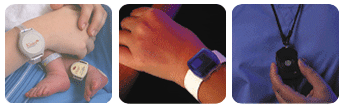
This is not the case, however, VeriChip has made special RFID bracelets and necklaces for use in the hospital environment.

Applications for use in the Military, it turns out, will not escape the "under-the-skin" approach to tagging.

Excerpts from eWeek Magazine -

VeriChip Sells First Baby Protection System, in Talks with Military
By Renee Boucher Ferguson, eWeek.com - August 25, 2006


VeriChip, the company that makes human-implantable RFID chips, is looking to span its equipment from newborns to the military's enlisted.

The company announced Aug. 24 that it has made the first sale of its infant protection, wander prevention and staff duress system to the Brampton Civic Hospital in Brampton, Ontario. Separately, the company confirmed a day earlier that it is in talks with the military to test its implantable chips in two branches of the military.

VeriChip said in a press release Aug. 24 that the Brampton hospital, under construction now, is spending $750,000 to have VeriChip's platform and applications installed at its newest facility.

VeriChip's infant protection system is really two separate above-the-skin solutions, one a band similar to a standard hospital bracelet that has an embedded RFID chip. The second option, called the Halo skin-sensing system, is similar to an electronic key fob for a car that can be attached to an infant's ankle or a patient's wrist. Another key fob-type device can be worn around the neck of staff members to use as a personal panic button.

Using a handheld reader, healthcare professionals are able to securely access a patient's unique VeriChip ID number which can be looked up in a designated secure healthcare information database, allowing them to immediately take the safest course of action. Image Credit: VeriChip Corporation

But VeriChip also has a separate patient identification system, VeriMed, which is used beneath the skin. Once the chip is implanted in the fatty part of a person's arm (or in the hand, as chip volunteers have done), it displays a 16-digit identifier when tapped by an RFID reader. The number accesses health information in a database that requires a username and password for admittance.

VeriChip, of Delray Beach, Fla., confirmed in media reports that Scott Silverman, its board chairman, has held informal meetings with U.S. Navy and Air Force officials to discuss a feasibility study of its VeriMed system.

"These were preliminary discussions in informal meetings about the VeriMed project...and how it might be incorporated into the Department of Defense's electronic health records program," said Nicole Philbin, a spokesperson for VeriChip.

The VeriMed chip, which is designed "to give voices to the voiceless in the most crucial of times," according to Philbin, would be applicable to both veterans and enlisted personnel in both the Navy and Air Force.

The idea with the VeriMed chip is that data can be accessed even if a patient is severely injured or unconscious.

While civilians have the option of choosing how much information is accessible on the VeriMed database, it's not clear what the guidelines would be for enlisted personnel.

----
The government is no stranger to RFID. In July, the Army paid $3.76 million to 3M to implement an RFID-based system that will track medical files at its massive Fort Hood Army base in Texas—the military's largest active-duty domestic base. Fort Hood houses the active medical records of more than 150,000 men and women stationed there—and their dependents' records.

In concert with NATO, the U.S. military is using RFID to track goods in war theaters as well as through global supply chains. The U.S. State Department, in concert with the Department of Homeland Security, mandated RFID-chipped passports by the end of this year. And the U.S. Food & Drug Administration recently released its recommendations for the pharmaceutical industry regarding the use of RFID to track counterfeit drugs.

The FDA also approved the use of VeriChip's VeriMed implantable chip in October 2004.

In a document titled "Guidance for Industry and FDA Staff" released in December 2004, the FDA made a couple of recommendations for VeriChip as it goes about its business of chipping individuals and groups like the military's enlisted: "When discussing the issue of medical devices that store, access, and/or transfer information externally, you should address the concept of information security," reads the document.

The FDA also identified a number of risks associated with an implantable RFID chip, including adverse tissue reaction, migration of the implanted transponder, electromagnetic interference and electrical hazards.

Read All>>

Thursday, August 03, 2006

Lab Nets Learning Experience - Biometric COKE

UCSD Biometric Vending - Facial Recognition Screen. Image Credit: UCSD SodaVision

College is such a fun time. Only in the lab would one think up a way to use one of the more difficult and complex approaches to "Speedpassing" a soda.

This spring, A group of grad students at the University of California, San Diego (UCSD) are in the process of creating what one of the students calls the "most over-designed soda machine in the world."

The idea they were able to prove (almost - 80% accurate) was that a group of dedicated computer science students could outfit a soft drink machine with an automobile computer and program it to accept account creation and verification input from a barcode scanner and a few biometric image process devices.

Excerpts from CR80News.com -

Grad students in San Diego build biometric vending machine
By Andy Williams, Contributing Editor - Monday, July 31 2006

The project, called SodaVision (sodavision.com), is the brainchild of UCSD engineering associate professor Stefan Savage.

http://www.sodavision.com/

"I came up with the idea in June, 2005, but we didn't get the soda machine until later that year. I had some discretionary money, so I bought a generic machine," he said. "The biggest problem was putting through a purchase order for a 'biometric soda machine.' I got a few weird looks. I never actually gave the project the name. That came from the students."

He said the computer science department at UCSD has had a soda and snack cooperative, nicknamed Chez Bob by the students, for some 20 years. "You would put in 50 cents and take out a coke. About 10 years ago, someone came up with the idea that you could log into a computer, list the amount of money you're depositing into the (Chez Bob) account; then when you buy a coke, log that in against your account," said Dr. Savage. "I thought, 'Here we are a leading computer science program, we should have something better.' So, I offered it as a project for the grad students."

What SodaVision ended up becoming - and it's still a work in progress - is what second year computer science grad student Tom Duerig calls "the most over-designed soda machine in the world."

"I wanted it to be incredibly easy to use," said Dr. Savage. "I bought the soda machine and a touch screen and the fingerprint reader, a Fujitsu MBF 200. We looked for a fingerprint reader that would work with our software and with Linux. Now they (the students) have actually torn (the fingerprint reader) apart and rewired it to work with the machine."

The students built the interface. "I had one guy design a touchscreen that looks like the one used in Star Trek. Somewhere along the way they added a camera and another group added a 2D laser barcode scanner," said Dr. Savage.

The camera, a web cam, is for facial recognition, the next big step in the technology-heavy machine. "The students even wrote the software to recognize the images," he added.

"Our goal is to have the soda machine simply recognize who is standing in front of it when a soda is vended or money is inserted to charge or deposit into the appropriate account. And thus was born SodaVision," wrote Mr. Duerig in a paper explaining the project.
----
The brain inside SodaVision is a small computer designed for cars. It is stored inside the soda machine and is equipped with an Intel Celeron 2GHz processor with 512MB of RAM. The computer fit the students' needs in that "it was very small, slow, quiet, and didn't produce a lot of heat," explained the 23-year-old Mr. Duerig. "We briefly considered putting a quad CPU 1U server in there as that would have fit, but we decided against it for heat reasons."
----
The machine is available to grad students, faculty and staff in a locked room accessible via a card reader on the door.

While the team of five grad students concentrate on increasing the accuracy of the facial recognition software, Dr. Savage still utilizes just the fingerprint reader. "I use it every day, because I'm used to using the reader."

"The only way to purchase soda is when you're logged in (currently via the fingerprint reader). You can also deposit money into your account (through a slot attached to the machine)," said Mr. Duerig. The soft drink or candy bar or other snack is then scanned with the barcode reader and charged against the user's account.

Right now, the facial recognition part of SodaVision is carrying an 80% accuracy rate. "We're shooting for 95% accuracy." Eventually, the plan is for "dual recognition," added Mr. Duerig. You sign in with your thumbprint, and then go for facial recognition. But until we hit the magic 95% accuracy, it isn't integrated with the payment/purchase system," he added. "I suspect we'll hit that mark at the end of this summer for the unveiling of the project."
Read All>>
I really do know that this soda machine is really just a project but jeeeeez ... to get a COKE, one has to:

First, access the room the machine is located via a proximity access card reader at the door (don't forget the card).

Then, one needs to place a finger on a fingerprint reader to verify that an account exists.

Next, one needs to stand in front of a webcam to have a picture taken so that the image can be processed by a car computer and matched with a previous image stored in the database.

Then, make a soda selection from the machine.

And finally, place the barcode printed on the COKE can in front of the barcode reader. Once scanned, the purchase is added to the corresponding account associated with the fingerprint and the face image in the database.

To leave the room, one may have to use the proximity access control card to open the door in order to get out.

Frankly, I like the idea Europe uses for applying access technology to purchasing from a vending machine. The process uses a cellphone, a telephone number, an account (ones enabled cellphone account), a 2-D Matrix style code (QR Code), and a scanner that can read the LCD screen of the cellphone (example - QK-11 scanner from DENSO).

The process is simple, verifiable and explained in a previous post here at Symblogogy.

Wednesday, July 26, 2006

Proximity Passport Perception Problems Persist

Image Credit: theducks.org/© 1995-2006 Alex Dawson

Radio Frequency Identification (RFID) enabled passports have many inherent benefits, however, some fears of identity theft and other potential information breech perceptions exist.

The confusion and concerns about the potential of anyone being able to retrieve private, personal information "from a distance" may just be a matter of education - says an ABI Research Report.

Excerpts from eWEEK -

Report: DHS Should Soothe RFID Passport Fears
The upcoming U.S. e-passports are still giving rise to privacy concerns; ABI Research recommends that the government speak up about the technology.
By Renee Boucher Ferguson - eWEEK - July 25, 2006


There is a lot of miscommunication regarding the security and privacy of the U.S. government's new RFID-based e-passports, according to ABI Research Analyst Sarah Shah.

ABI Research released a report July 25 that suggests that the Department of Homeland Security, which will issue the e-passports in conjunction with the State Department starting in August, should speak out to reassure the public about the safety of contactless technologies.

The U.S. government plans to implement contactless technology, which is essentially data transmission that is activated by waving a reader over an RFID (radio-frequency identification) chip that has a tiny embedded antenna, in all electronic passports by the end of 2006.

"There are uneducated claims being made by some privacy advocates," said Shah, in Oyster Bay, N.Y. "They make claims such as, 'If you have a contactless chip in your passport [the government] can track you everywhere and they'll know everything about you.' This is simply not true, and the DHS should publicly explain what the technology is capable of, and why it's secure."

Since the State Department announced in 2005 that it would issue RFID-chipped passports by the end of 2006 to all passport agencies, security and privacy advocates have been up in arms.
The concern is that the data stored on the chips - including name, address, nationality and date of birth—will be accessible not only to customs agents, but to anyone with the wherewithal to hook up a reader and go scanning (or skimming, as the case may be) for information. The tiny silicon-based RFID chips that will be embedded in the passports themselves contain embedded antennas, which transmit data once a specially designed RFID reader is waved in front of it. One issue is the range at which the readers can access data.


"Our concerns extend beyond the passports," said privacy advocate Katherine Albrecht, co-author of "Spychips: How Major Corporations and Government Plan to Track Your Every Move with RFID," during a May 26 interview with eWEEK. "At a recent conference calling for RFID tags in identity documents [some speakers] were talking about the tags being read from 20 to 30 feet away. We were actually quite stunned by that."

Kevin Ashton, the co-founder of MIT's Auto ID-Labs, the research center that essentially founded a global RFID network and standard that has since become EPCglobal, is against the idea of using RFID chips in passports.

"The idea of storing all this sensitive data [in passports] is horrible. You can take the chip off one passport and stick it on another. No one will know the difference," said Ashton, now vice president of marketing at ThingMagic, in Cambridge, Mass., and a professor teaching RFID classes at MIT. "My big issue is it is truly a stupid idea to store any information on an RFID tag other than a unique number. Otherwise there is always the risk of data change."

Ashton suggested that the way the e-passport's RFID technology should work - if it has to be there at all - is to have a chip that stores a unique number that can only be authorized by those people who should have access to it. The number would refer back to data stored in a secure database. The only information anyone should be able to find on the passport, he said, is a photo.

----
Bruce Schneier, a well-known security technologist and author, said during a May 26 interview with eWEEK that eavesdropping will only get easier.

The DHS has implemented some security and privacy devices on the e-passport chips: a metal shielding device on the passport's front cover that prevents the data from being read when it's closed, and BAC [basic access control] technology to prevent skimming and eavesdropping of data. Schneier said the precautions are good, but not good enough.

"Shielding is good. Basic access control is good. Putting a switch would be great," said Schneier, in Mountain View, Calif. "But if you don't have RFID you don't need any of this. I haven't seen any compelling reasons why we are doing this. If we [the government] did it out in the open then everyone would scream."

----
"The public has pretty overwhelmingly said they don't want RFID in documents, yet [the government] plowed ahead with it anyway," Albrecht said.

ABI Research said the bottom line is that the ongoing security and privacy debates probably will not have an impact on the DHS' decision to issue e-passports in August.

"We feel that the DHS should take steps to mitigate public concerns today," Shah said.

Read All>>
RFID may sound like a good idea for automating the process of identification through our nation's checkpoints, but when it comes to the internal security of our country and the protection of our identity ... this just isn't the same application process as a "Mobil Speedpass" or a freeway tollway access payment verification.

Typical, the federal government remains clueless to the real issues that surround the application of this proximity technology.

As in real estate (location, location, location) the axiom for the implementation of a new technology is "application, application, application!"


UPDATE (August 21, 2006):
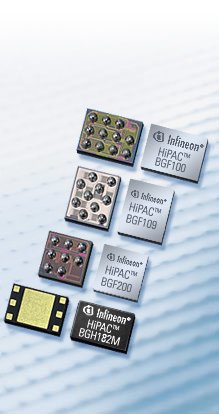
New US Passports Contain Secure Identification Chips from Infineon; Advanced Technology Meets International Standard for Secure Travel Documents Image Credit: Infineon Technologies AG

Infineon to supply chip for U.S. e-passports
U.S. set to begin issuing passports equipped with RFID chips containing biometric data
By John Blau, IDG News Service - August 21, 2006

German chip maker Infineon Technologies will supply chips for new electronic passports that the U.S. will begin issuing in the coming weeks.

Of the 15 million e-passports to be issued by the end of the year, several million of them will be equipped with Infineon chips, the manufacturer said Monday.

The first wave of U.S. passports with chips, however, comes despite lingering privacy and security concerns. Earlier this month, a German security expert at the Black Hat security conference in Las Vegas demonstrated how e-passports -- equipped with an RFID (radio frequency identification) chip containing biometric data -- could be copied using a laptop computer, an RFID reader and smart card reader software.

The chip contained in each new U.S. passport issued from October will contain personal data, such as the bearer's name, date of birth, validity period, and a digital photo of the individual.

The e-passport, according to Infineon, is designed with multiple security levels, including the basic access control (BAC). This security feature requires the border control inspector to pass the document over a scanner that reads coded information and then authorizes the electronic reader to access the data stored on the chip. Data transmission occurs over a distance of only around four inches, or 10 centimeters.

More than 50 individual security mechanisms are inside the Infineon chip, including sophisticated computing methods for encrypting data. Protective shields on the surface of the chip and sensors also help prevent unauthorized people from being able to read the contents of the chip.

Infineon, which is located in Munich, is supplying chips for e-passport to several other countries, including Germany, Norway, and Sweden.
Link Here>>

Tuesday, July 25, 2006

Convenience Trumps Impulse Capitalism

Image Credit: Fujitsu Transaction Solutions - USCAN

It turns out that when shoppers are into a pure "Hunter/Gatherer" mode of shopping (ie. get in - get it - and, get out), the impulse nature of decision shopping drops dramatically.

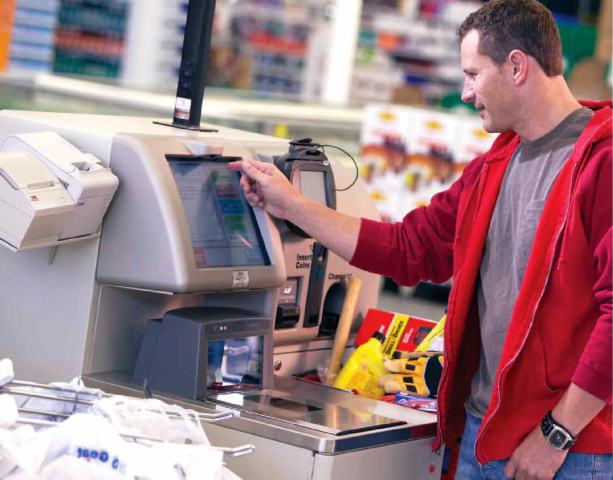
You know what you want and you run to the store to get the items, where do you choose to checkout and get on with your day? The self-checkout station, that's where. A place where there is elbow room, no racks to bump into, and a quick turn-around conclusion to your short shopping experience ... after all, you have better things to do.

This self-checkout thing has become a real problem to retailers, however. Now, some of us will not even shop in a store unless they offer a self-checkout option!

This from the New York Post -

QUICKIE CHECKOUT CUTS BUYS
By SUZANNE KAPNER - New York Post - July 25, 2006

Self-checkout aisles at supermarkets dramatically reduce impulse purchases of items like chocolates and magazines, a new study reveals.

Shoppers make last-minute purchases 45 percent less often when they use automated checkout machines, as opposed to waiting for a cashier to check them out, according to IHL Consulting Group.

The drop in impulse purchases was greater for women (50 percent), than for men (27.9 percent), according to IHL, which polled 533 people to determine their shopping habits.

IHL analyst Greg Buzek warned that companies like Hershey's, Wrigley's and Pepsico, which make many of the products that line supermarket check-out lanes, could face a drop in sales unless they figure out a way to better appeal to time-strapped consumers.

Some supermarket chains like Kroger and Meijer have addressed changing consumer behavior by adding items like rotisserie chicken and fresh baked breads to the front of stores, to entice shoppers through their sense of smell, as opposed to simply using visual displays, Buzek noted.

In 2005, consumers spent more than $110.9 billion in self-checkout transactions at retailers, up 35 percent from the prior year, IHL said.

However nearly 30 percent of respondents said they preferred cashiers, opting to only use self-checkout when lanes staffed by employees had long lines.

Read All>>
Have Scanner ... Will Shop!

Wednesday, July 19, 2006

"Food Deserts" Lead To Heightened Early Death Rates

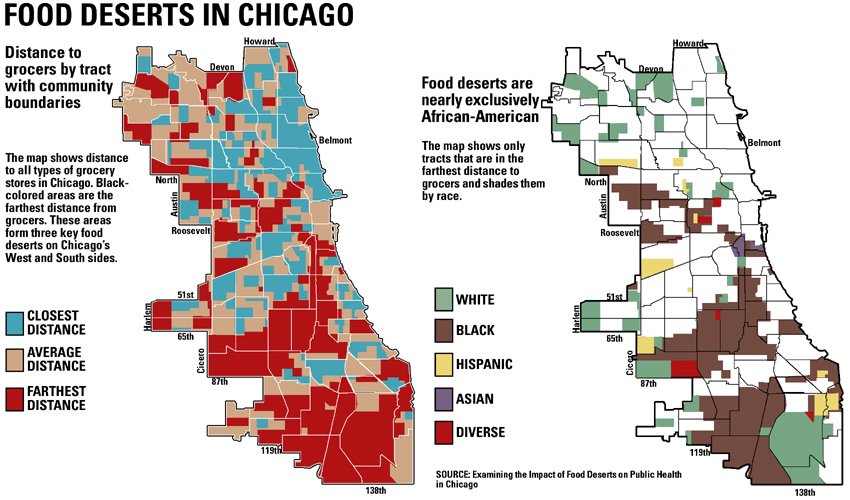
Researcher Mari Gallagher measured the distance to the nearest grocery and the nearest fast-food restaurant for every city block to come up with what she called a "food balance" score for each community area in Chicago. Image Credit: Chicago Sun-Times

A report titled, "Examining the Impact of Food Deserts on Public Health in Chicago," is believed to be the first to examine the correlation between population and the access to food in supermarkets. Further, this report follows past research by Gallagher looking at the distribution of chain supermarkets in Chicago and access to grocery stores as a function of income.

Excerpts from the Chicago Sun-Times via FMI Daily Lead -

Early deaths tied to lack of grocery stores
BY JANET RAUSA FULLER Staff Reporter - July 18, 2006

Chicagoans who live in areas with scant grocery stores and many fast-food restaurants are more likely to die prematurely and at greater rates from diabetes, cancer or heart disease, a study to be released today finds.

Residents of such "food deserts" -- clustered predominantly on the West and South sides -- also are more likely to be obese and suffer from hypertension, according to the study commissioned by LaSalle Bank.
----

Taking into account health data for those areas and holding race, income and education constant, Gallagher found that the more "out of balance" a community is in terms of food choices, the higher the prevalence of chronic health issues and diet-related deaths.

Diabetes rates more than double

African Americans, in particular, are "most disadvantaged when it comes to balanced food choices," her research found. They travel the farthest on average to any type of food store and tend to live in communities that make up three main clusters of food deserts in Chicago, according to the study.

The death rate from diabetes in the worst -- and predominantly black -- food deserts is more than twice that of other communities, the study found.

"I think the good news of this study is that it brings a new call to action for what can be done in these communities," Gallagher said. "We know that across the country, the black population generally has higher diet-related deaths and health disparities. Can you change somebody's genetics? Can you change somebody's eating preferences? Can you change somebody's income? Certainly there are some things along those lines that can be done . . . but the good news is you can probably even more easily locate a grocery store somewhere."

----
The areas with the highest concentrations of single mothers and children "is almost a one-on-one match" with areas designated as food deserts, the study found.

Obesity also said to be related

The study, which will be the focus of a forum today at the Palmer House Hilton, also makes a correlation between the location of grocery stores and body mass index, suggesting that, "as grocery store access decreases, obesity increases." The West and South sides have the highest obesity rates, while the North and Northwest sides have the lowest rates, the study found. Gallagher said the addition of even a single grocery store in an area where there are few to none could lower obesity rates.

Read All>>
Why Symblogogy? -- If you are not scanning, you are not living!

Wednesday, July 12, 2006

2 Fingers, Or 3? ... The Accountability Of RFID

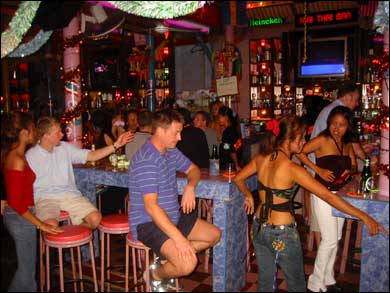
Typical bar scene at the Mai Thai Bar - Patong beach - Phuket Thailand. Image Credit: phuketwatch.com

RFID (Radio Frequency Identification) tag technology has come a long way from just being a tool to log if something or someone has passed through a reader field so that one knows if the object has been tracked to its present location or not.

Now, there are tags that record the movements and duration (time) the tagged object was moved so that one could make assessments as to what was happening with the tagged object without actually watching exactly what had happened to be informed.

These tags are now being applied to liquor bottles to aid the owner as to the efficiency of the bartending staff. These tags track the angle movement of the bottle to be poured and logs the amount of time the bottle is in this position, and with software, the manager is able to determine how much was actually poured and served to the bar customer.

So, when the bartender asks you, "Is it 2 fingers, or 3? ... What he/she really means is - is it a two or three second "tilt" from the RFID-tagged bottle.

Excerpts from eWEEK -

Bartending, RFID Style
By Evan Schuman, Ziff Davis Internet - July 11, 2006

On a busy Saturday night, a good bartender makes a lot of money for the bar's owner, but an overly generous bartender - or one fond of pouring free drinks for friends - can cost the owner even more.

A Miami-based 7-year-old beverage-monitoring software company is drinking from the keg of RFID and is selling a tilt switch that attaches to bottles and updates an Internet database every time the bottle is poured. Hilton, Hyatt, Outback Steakhouse, TGI Fridays and others are reportedly testing the system.

It's not merely recording how many times the bottle is poured, but it factors in the tilt of the bottle, the duration of the pour and the bartender's pouring style to calculate how much liquid is leaving the bottle.

"The software converts the tilt into an estimated volume, and the conversion is automatically perfected based on the history of each bottle; hence it becomes more accurate over time and adapts to each bartender's habits. When the bottle is empty, our sensor knows it and the software readjusts the historical pours of each bottle to the known volume of the bottle," said Beverage Metrics CEO David Teller, who said his company has between $5 million and $10 million in annual revenue. "Our system reconciles pours to ring-ups and recipes and automatically decides what is a long pour that should be changed to two pours [and] when to combine short pours in sequence."

Because the server that watches the tilt-tracking RFID system also tracks the POS (point-of-sale) system, it can also know what ingredients bartenders are using to make drinks and whether they are following the authorized recipes in addition to whether they are pouring too much or too little.

Teller said he expects the sensors to eventually sell for "less than $2 with housing, attachment means, on/off switch, tilt switch, TI micro, five-year battery and RF circuit." Right now, though, the price is closer to $5 plus a subscription fee roughly equivalent to about 1 percent of revenue, Teller said.
----
Although the system's readers have a range of about 50 feet, Teller said a bartender can't outsmart the system by pouring a drink beyond the range of the sensor - or simply disabling the sensor - because all of the tags are in periodic contact with the server.

"It issues an alert if the tag is removed," he said. "If the sensor doesn't ping, 'Hey, I'm here' after an hour, we start paying attention to that guy."

John Fontanella, an RFID analyst with the Aberdeen Group, dubbed Teller's system "an interesting idea" but wondered whether wireless rings around the bottles would scare off customers and chill some of the bartender-drinker relationship.

----
But Fontanella is even more cynical about whether it will truly minimize theft. "I'm already thinking about how bartenders will beat this," he said. "They will find a way."
Read All>>

Thursday, July 06, 2006

RFID Privacy Guidelines - Like Catching JELL-O.

Jell-O Trivia: March 17, 1993, technicians at St. Jerome hospital in Batavia test a bowl of lime Jell-O with an EEG machine and confirm the earlier testing by Dr. Adrian Upton that a bowl of wiggly Jell-O has brain waves identical to those of adult men and women. Image and Information Credit: LeRoy Historical Society/JELL-O Museum

The Canadian province of Ontario recently issued guidelines on how companies, using RFID in consumer based applications, should always consider the privacy of the individual consumer's information gathered and how it can or should be used.

The guidelines were issued by the Information and Privacy Commissioner/Ontario - Ann Cavoukian, Ph.D., Commissioner, in June - and were intended to serve as privacy "best practices" guidance for organizations when designing and operating Radio-Frequency Identification (RFID) information technologies and systems.

The problem comes when a company is already using information gathered via barcode, how does one square these privacy guidelines with the company's current loyalty program and advertising methods.

There's more.

Excerpts from an opinion issued by eWEEK -

Canadian Province's New RFID Privacy Guidelines Could Have the Wrong Effect
By Evan Schuman, Ziff Davis Internet - June 22, 2006


The commissioner for Information and Privacy in Ontario unveiled June 19 a series of tips and guidelines for using RFID within her part of Canada.
----
The guidelines themselves certainly need to be examined seriously, because North American products can ill afford to accommodate two different standards, and besides, neither Mexico nor the United States has any material privacy RFID rules at the moment.

Current U.S. views on RFID privacy pretty much come down to a modified monetary laissez-faire policy ("leave campaign contributors alone and the market will take care of itself"), while Mexico's position is closer to "You can capture anything about our citizens that you want as long as you pay a living wage. OK, one-fourth a living wage, but we want a break after 18 hours of work."

The Ontario approach is a bit different. One example: "Organizations should only collect, use or disclose RFID-linked personal information for purposes that a 'reasonable person' would consider appropriate in the circumstances."


It then lists two things that Ontario believes would be unreasonable: "price discrimination" and "tracking and profiling individuals without their informed, written consent."

The "price discrimination" is aimed at applications that will charge lower prices to customers they want to attract and higher prices for those they want to repel, such as aggressive bargain hunters.

There have been unsubstantiated allegations about this on some Web sites, but those allegations involved cookies, not RFID.

Still, the potential exists for RFID to enable the same kind of capability. But isn't this simply a continuation of the time-honored discounts for those with a frequent shopper loyalty card?

Aren't those card programs offering discriminatory pricing, in the sense that some customers are being charged different prices than others?

That gets into that second reference: " tracking and profiling individuals without their informed, written consent."

Is this to be interpreted to mean that such tracking/profiling is permitted in Ontario, as long as it doesn't involve RFID?

It would seem silly to permit it for CRM programs as long as they used barcodes, but to somehow find the privacy invasion reprehensible if it involves RFID.


Tracking and profiling are fighting words. Is it profiling to offer discounts on one brand of peanut butter only for people who regularly purchase a particular competing brand?

Is it tracking to note that one consumer spends more than $900 per month typically and then to send them e-mail invitations to some event?

The wording in the Canadian material doesn't exclude aggregate data, but isn't that based on tracking individuals? Is that prohibited as well?

----
Here's a well-intentioned one: "Organizations should not use or disclose RFID-linked consumer information for any purpose to which the individual has not consented."

The only problem is that retailers will likely throw such language into the fine print on the back of every loyalty card, check-cashing card or anything else, including credit card slips.

As long as fine print exists on unrelated documents, such consumer consent will have little value.

It's certainly a good thing that some government officials are thinking through where RFID could go in terms of consumer protections.

But government edicts without industry support won't help much.

----
Back in December 2004, U.S. Senator Chuck Schumer called a news conference to promise legislation to regulate how retailers handle return policies. That legislation was never introduced.

Although Schumer's office has never officially explained what happened, some who were working on the legislation said that it became quite difficult to legislate wording and policy on something so customizable and also so proprietary.

In other words, the exact methodology to determine excessive returns could be thwarted if fraudsters knew the particulars.

----
There is a common thread between the two. On a surface level, forcing return policies and RFID tracking policies to be public sounds like a good thing, but digging down deeper, it's very complicated to do it in a meaningful way that will actually advance the public cause.

Will government leaders score points by announcing rules and then abandon their efforts without enforcement?


Updated: Opinion: Warning consumers about anything presupposes that there is something bad about that item, something that should be avoided. This might be a self-fulfilling prophecy.
Read All>>

Consumer based RFID applications will always require critical review of their intended results and eventual consent by consumer privacy advocacy groups as to the benefits derived.

Tuesday, July 04, 2006

Grocery Database Errors vs. Price-Scanner Errors

Label with Universal Product Code (UPC) barcode. Borrego Springs Bottled Water distributed throughout San Diego County in Southern California. Image Credit: ecj

This issue of terminology is really getting out-of-hand. The terminology in question is the use of "Price-Scanner Errors" when the price on the shelf and/or the price sticker on a product does not match-up with the price stored in the database when the product is passed over the barcode scanner at checkout.

The terminology suggests that the problem with the difference in the price rests with the lowly input device ... the barcode scanner ... that the scanner has transmitted errors in the price.

It never fails that the Main Stream Media (MSM) packages a story to be broadcast around the Holidays warning of this evil, ugly threat of the barcode scanner getting the price wrong, and it usually benefits the retailer and gyps you, the consumer. That darn barcode scanner!

The poor barcode scanner is just a (excuse me) dumb input device. The scanner reads the barcode which contains a code specific to the product being scanned. The code is then transmitted to the main computer that holds the information programmed to be looked-up for that product in a file called a 'Database" (or look-up file). Humans control the information that is stored the file about the product and that includes the pricing information.

So, guess what, the price-scanner errors are really human to computer database entry errors. The information is not kept up-to-date (sloppy) or there is an attempt to defraud (not good) which is why companies that continually have errors after a survey ... get fined.

Please correct this terminology - "Price-Database Errors" as opposed to "Price-Scanner Errors".

This from the Winston-Salem Journal -

Clemmons market pays error penalty
The Winston-Salem Journal - Thursday, June 29, 2006

The N.C. Department of Agriculture and Consumer Services recently collected a $1,170 civil penalty from Southern Family Markets #83 at 3627 Clemmons Road in Clemmons, for excessive price-scanning errors.

Inspectors found price-scanner errors during two separate inspections at the store, the department said in a statement. An initial inspection in February found an error rate of 7 percent based on seven overcharges from an inspection lot of 100 randomly selected items.

A follow-up inspection in April found eight errors from 300 items, an error rate of 2.7 percent. If a store has more than a 2 percent error rate on overcharges, inspectors discuss the findings with the store manager and conduct a more intensive follow-up inspection, the statement said.

Link Here>>