Showing posts with label Japan. Show all posts

Friday, July 31, 2009

Vein Vending Machines - Purchasing With The Point Of A Finger

While Japanese banks have been using the technology for a few years, now Hitachi has introduced a vending machine that eschew coins and credit cards for the veins in your fingers. Image Credit: Getty via Gizmodo

Vein Vending Machines - Purchasing With The Point Of A Finger

Hitachi's proprietary biometric authentication system requires that users first register an account (probably linking their vein pattern to a credit card), but it allows one to purchase, say, a delicious can of green tea or icy cold black coffee by inserting a cautious hand into a machine for a quick scan.

Vein ID - How It Works - Image Credit: Hitachi via Symblogogy

Of course, the system exploits your identity a bit in the process, using age and gender information stored in a mass networking database file to display an appropriate video ad while you enjoy your refreshment. But hey, if a public Coke machine light-probing your innards doesn't bother you, why should a quick sales pitch?

Hitachi fingerscan approval vending machines. Image Credit: Mitsutsuka Satoshi for Hitachi

In theory, any retail outlet, hooked up to this network database and a fingerscan device would allow transactions with a proof of an ability to pay. Supermarkets, gas stations, and other common purchasing environments, when combined with technology, would bring about a cashless, cardless buying society.

If this ID through a tip of a finger thing catches on, it will bring about a whole new meaning to the phrase/term Point-Of-Sale.
(ht: Gizmodo)

Friday, September 28, 2007

The Image Of A Mobile (phone) World

Japanese commuters while away the journey by watching TV on their mobiles. Image Credit: David Sacks/Getty

The Image Of A Mobile (phone) World

Portable programmable electronic communication devices, which received their birth forty years ago with the release of the T58 & T59 by Texas Instruments, have come a long way and there is no better place in the world than Japan to judge and assess how far.

The key to this evolution comes down to having the handheld cellphone be an on-the-fly, symbology decoding, self-programming computer. A cellphone with a good processor, a camera, a printed symbology (ie. slang: barcode) and a strong infrastructure can deliver more interaction and information than a WiFi internet connection HotSpot on many applications.

The most amazing application that can be delivered through these means is that a person with a properly programmed cellphone can scan a “3D Barcode” (a colorized QR Code) and the phone decodes the image taken with the camera and delivers to the cellphone screen 20 seconds of video communication to the user. That’s right! … 20 seconds of the latest DVD release from “The Bourne Ultimatum” that might help one to decide to buy this DVD gift for Christmas – for example.

PM Code - Colorized QR Code that can deliver a 20 second video to the users phone screen without the need to be hooked-up to a WiFi HotSpot or incur cellphone call minutes. Image Credit: Content Idea of Asia (CIA)

Furthermore, the cellphone user did not have to use the cellphone radio towers or a WiFi Hotspot to have the handheld perform this amazing feat. The 20 seconds of video came directly from the “Barcode” that the user’s phone took a picture of … and decoded to display.

More mobility application news happening in Japan from The Guardian Unlimited -

Why mobile Japan leads the world
A combination of an urban lifestyle and infrastructure advantages mean that the fixed internet is being left behind by the mobile

Michael Fitzpatrick - The Guardian - Thursday, September 27, 2007

Yasuko San is aiming her mobile at a small, square tattoo on paper, clicking a little and peering happily at the result. Her prize? The latest novel written for the mobile, entitled "Teddy". Such serialised novels for mobiles are just the latest phone application that has caught the Japanese imagination, but - apart from neighbouring South Korea - few others.

Those printed square icons, however, made their debut in the UK earlier this month (to promote the DVD of the film 28 Weeks Later). Known as QR (quick read) codes, they have aided Japan's mobile revolution by making it easy to access a web page via mobile. Users can be directed to sites by snapping the codes printed in magazines, posters and even on biscuits.

PM Code Image as captured via the cellphone camera. Image Credit: Content Idea of Asia (CIA)

Mobile subscribers

Their British outing is a full four years behind Japan's adoption. In fact, we lag Japan in nearly every aspect of mobile use - except possibly in annoying other commuters on trains.

Lost in Japan? Let your mobile's GPS guide you. Bored? Download the latest manga comic or an e-book to read on the train, or go shopping and pay by swishing your mobile in front of the till, because the phone is also an electronic wallet.

You can also collect e-coupons, pay bills, play Final Fantasy, update your blog and pay and check into hotels wirelessly. Soon the airport check-in will be history in Japan, too, as the e-ticket in your phone becomes your boarding pass.

Nearly all are services based on the success of the mobile web in Japan, where in a nation of 127 million the number of mobile internet subscribers recently passed 100 million. Not for nothing are the Japanese now known as the Thumb Tribe - a tribe who, for the most part, prefer their mobile to the fixed internet.

Apart from the killer application - email - 80% say they use other functions too. Downloading music is popular (80% have tried it), as is TV for mobile - half of its subscribers use it regularly. Three quarters of users say they enjoy online clothes shopping with their mobile at least once a month. What they are less keen on is video calling: in Japan, as in the UK, 90% say "no thanks, never". And as for using the mobile as a modem - to link to the internet - that's very expensive in Japan.

It is no wonder those touting m-commerce as the next big web thing tell us Japan is the future blueprint. "Japan is the world's high-tech testbed for a wide range of consumer electronic devices and systems - many of which never see the light of day in overseas markets," says Daniel Scuka, keitai guru and consultant for publishers Wireless Watch Japan. "So keeping up with developments here is vital to knowing what's going to hit Europe and the US 24 months in the future; doubly so with respect to mobile and wireless."

By offering the Japanese a multiplicity of services - and, very importantly, some very cool handsets to use them on - the operators have created what every western mobile service provider is dreaming of: a mobile lifestyle culture that keeps millions reaching for the mobile rather than the fixed internet. But it does have its disadvantages.

Most us would feel miffed if we lost or damaged our mobiles. The Japanese would be paralysed without theirs: nearly half of Japanese confess to being obsessed with their mobile phones.

But why is such technology such a hit in Japan and not in other mobile-savvy nations such as Finland? According to the man who kickstarted the trend - the father of i-mode, NTT DoCoMo's Takeshi Natsuno - it is because of the Japanese genius for designing new technologies that can be adopted by anyone, especially techno-phobes. It's not about "bandwidth, nor standards, nor unique Japanese culture", he says. It is about "fun and convenience".
----
Demanding consumers

The Japanese are blessed with some of the best-looking technology in the world. It has to be intuitive, simple and high-quality, not because the Japanese are so tech-savvy, but because they are the most demanding consumers in the world.

According to Scuka, more than 100 new phones hit the Japanese market last year as manufacturers tried out new ideas on the public. Some cultural factors, as with any other country, do play a part in Japan's willingness to take up some technologies such as TV on the mobile.

As in Europe, this was at first a washout, but as watching TV in public becomes more socially acceptable in Japan, the number of subscribers is rising. Au, the second largest mobile network in Japan, recently signed up its five millionth subscriber to the service.
----
It is this urban lifestyle where convenience is the key which has necessitated the rise of the all-in-one mobile plus those very funky handsets. By comparison Apple's iPhone is a mere 2.5G plaything. In Japan, which is already into 3G and heading towards 4G, they make mobiles look good and work hard.
Reference Here>>

Tuesday, May 01, 2007

Smartphones That Know When & Where To Move

New DoCoMo phones, which are being released in Japan this month, will initially use the motion-sensing technology for games. Later in the year, the phones will be able to use gesture-sensing for map browsing. Image Credit: GestureTek

Smartphones That Know When & Where To Move

A new type of technology is making its way to the cellphone platform. The mobile phone has played host to GPS, Cameras, Symbology (barcode) Scanning, Walkie-Talkies, Bluetooth Broadcasting, MP3 Music, and more.

Well, there is a new application in town. It is a technology that comes from the world of video games and it is now being applied to the cellphone. The technology allows the phone to sense motion and gestures which are then interpreted to bring direction motion to the display images on the screen.

We already can imagine how this would be useful in games displayed on the phone, but this technology may be of greater benefit to the user when it allows one to scroll around screen images that are larger than the display screen itself.

With just a flick of the wrist, one can move around scroll menus, maps, photos, web pages designed for computer displays – all without touching the pad keys on the phone.

In the emerging Web 2.0 world of mobility, this technology is a pretty smart move!

Motion Sensing - Shake, Rock, & Roll - Image Credit: GestureTek

Excerpts from CNET News -

Technology brings motion-sensing to camera phones
Marguerite Reardon - CNET News.com

A company that supplies motion-sensing technology for videogames is bringing that technology to mobile phones.

Earlier this week, GestureTek announced that NTT DoCoMo in Japan would be embedding the EyeMobile gesture-recognition technology into two new FOMA 904i series handsets.

The new DoCoMo phones, which are being released in Japan this month, will initially use the motion-sensing technology for games. Later in the year, the phones will be able to use gesture-sensing for map browsing. Eventually, the technology will also be used for motion-controlled menu scrolling, picture browsing and mobile Internet surfing, company executives said.

Motion-sensing technology has recently come into vogue with the huge success of Nintendo's Wii games console, which enables people to hit tennis volleys like they're Andrew Murray. The Wii uses tiny embedded devices called accelerometers that detect motion. Some handset makers, such as Nokia, Samsung, LG and even newcomer Apple, are using accelerometer technology to provide some kind of motion-sensing capability in a handful of handset models.

The software supports three main types of motion: shake, rock and roll. Shake can be used for actions such as rolling dice and shuffling MP3 decks. Rock interprets right, left, up and down gestures to generate traditional cursor-style user input commands. Roll offers joystick control by responding to tilting motions used in navigating games, maps or Web pages.
----
GestureTek is over 20 years old. The company got its start developing camera-based motion-sensing technology for museum installations. It then moved on to providing technology for digital signage, retail displays and devices such as the Microsoft Xbox 360 and the Sony PlayStation 2 EyeToy.

The deal with DoCoMo is the first time the company has licensed its technology to be embedded in mobile phones. The company has licensed its software to third-party BREW (Binary Runtime Environment for Wireless) developers to create games for Verizon Wireless subscribers. But in that case, the software is downloaded as part of the game and is not used for more advanced motion-sensing navigation applications.
Read All>>

This description of the new EyeMobile Engine software from GestureTek -

The EyeMobile Engine is a software-only solution that uses the existing camera on mobile phones to enable innovative mobile device interfaces and applications through real-time motion control.

An intuitive alternative to conventional mobile phone interfaces, EyeMobile allows you to do anything you would normally do with the device, such as...

Answer calls
Make a menu selection
Scrolling, pan, and zooming
Control games with hand motion

Instead of using small and cumbersome device buttons, EyeMobile enables you to use real-life motion for game control:

Driving
Flying
Throwing
Shooting
Fly-casting

EyeMobile Engine API for Developers -

A convenient environment for authoring EyeMobile-enabled applications for OTA and pre-embedded delivery to mobile devices, the EyeMobile Engine application programming interface (API) provides application developers with the means to integrate motion control with applications much the same way as with current analog controls such as keys and buttons.

The EyeMobile Engine SDK for OEMs -
Provides mobile device manufacturers with an ideal development environment for embedding EyeMobile Engine features.

Shake, Rock & Roll


Shake, Rock, and Roll are the EyeMobile Engine's three levels of tracking. Shake provides the amount of “shake” as a single value that the programmer can use as an input for such actions as shuffling MP3 play lists, throwing dice, etc. Rock is a gesture recognition system built on top of the Roll engine; Roll provides joystick-style input control.

Shake
The EyeMobile Shake extension provides developers with a “force of motion” control interface. Applications can then be controlled by how vigorously the user shakes the mobile device. Whenever a frenetic user-action is appropriate, the EyeMobile Shake extension may be implemented.

Rock & Roll
The EyeMobile RocknRoll extension provides the ability to control an application either by rocking the mobile device (i.e. flicking forward and back or side to side) or rolling it (i.e. tilting it from side to side or up and down). The RocknRoll extension presents the opportunity to control applications based upon rock, roll, or a combination of the two. With Rock, you can use the flick of a wrist to answer a call or simulate a throw. Use Roll to turn the pages of a document or for steering and navigation. Combine Rock and Roll to simulate mouse or joystick control.

Platforms

BREW
SYMBIAN
LINUX
Reference Here>>

Tuesday, April 03, 2007

Symbology Development Growth Gets MSM Attention

The pattern on a building in Tokyo is filled with information that can be read by a properly programmed cellphone with a camera. The technology can also be used for many other things, like buying airline tickets. Image Credit: Ko Sasaki for The New York Times

Symbology Development Growth Gets MSM Attention

Yes, that’s right, the Main Stream Media (MSM) here in North America is finally taking notice that cellphones and symbologies make good bedfellows (New York Times – “New Bar Codes Can Talk With Your Cellphone” – April,1 2007).

Ok, so they think, improperly so, that all symbologies are “Bar Codes” but the concept is clear – camera enabled cellphones are NOT phones with cameras … they are imagers with a way to link oneself with information either in the phone itself with decoding software, or to the internet via an automated software hyperlink function.

Again, all of this functionality is available now and has been a staple in the cellphone users world in Japan, Korea, The Philippines, and in many places throughout Europe.

As with anything else, the question comes down “monetization” … in other words, how do businesses make money through this proposition while giving the consumer what it wants?

Also, there are many types of symbologies, each designed to achieve a desired effect for the user of the program that is tied to the symbology that the phone is scanning.

Excerpts from The New York Times -

New Bar Codes Can Talk With Your Cellphone
By LOUISE STORY - The New York Times - Published: April 1, 2007

It sounds like something straight out of a futuristic film:
House hunters, driving past a for-sale sign, stop and point their cellphone at the sign. With a click, their cellphone screen displays the asking price, the number of bedrooms and baths and lots of other details about the house.

Media experts say that cellphones, the Swiss Army knives of technology, are quickly heading in this direction. New technology, already in use in parts of Asia but still in development in the United States, allows the phones to connect everyday objects with the Internet.

In their new incarnation, cellphones become a sort of digital remote control, as one
CBS executive put it. With a wave, the phone can read encoded information on everyday objects and translate that into videos, pictures or text files on its screen.

“The cellphone is the natural tool to combine the physical world with the digital world,” that executive, Cyriac Roeding, the head of mobile-phone applications for CBS, said the other day.

In Japan,
McDonald’s customers can already point their cellphones at the wrapping on their hamburgers and get nutrition information on their screens. Users there can also point their phones at magazine ads to receive insurance quotes, and board airplanes using their phones rather than paper tickets. And film promoters can send their movie trailers from billboards.

Advertisers say they are interested in offering similar capabilities in the United States, but cellphones in the States do not come with the necessary software. For now, consumers have to download the technology themselves.
----
“Everything in the physical world has information related to it somewhere electronically, including yourself and the desk you’re sitting in,” said Chas Fritz, chief executive of NeoMedia Technologies, a company developing these cellphone capacities.

The most promising way to link cellphones with physical objects is a new generation of bar codes: square-shaped mosaics of black and white boxes that can hold much more information than traditional bar codes. The cameras on cellphones scan the codes, and then the codes are translated into videos, music or text on the phone screens.
----
In Japan, the codes did not become mainstream until the largest cellphone companies started loading the code readers on all new phones a few years ago. Now, millions of people have the capability built into their phones, and businesses, in turn, are using them all over — on billboards, street signs, published materials and even food packaging.
----
“There are three things you tend to carry — your keys, your wallet and your phone,” said Rishad Tobaccowala, chief executive of Denuo, a unit of the Publicis Groupe that focuses on emerging and future technologies. “I can see something in advertising in one place, scan it with my phone and recall it later when I am shopping. Or, imagine, I can buy it using my phone.”

About a third of the 84 million households with cellphones in the United States have phones that have cameras on them, according to Forrester Research, and that number is expected to grow as consumers replace their phones. But few people with those phones have downloaded the software to read the codes.

In Japan, some highway billboards have codes large enough for passing motorists to read them with their phones. Hospitals put them on prescriptions, allowing pharmacies to instantly scan the medical information rather than read it. Supermarkets stick them on meat and egg packaging to give expiration dates and even the names of the farmers who produced them.

One of the most popular uses in Japan has been paperless airline tickets. About 10 percent of the people who take domestic flights of All Nippon Airways now use the codes on their cellphones instead of printed tickets.
----
The new technology would allow phones to read the codes from computer screens, too.

Commuters rushing out the door could scan Web sites on their computer screens with their phones to take the content with them. MySpace users could put a code on their personal pages, so that their friends can quickly transfer the profiles to their phones.
----
In the Philippines, the Daily Philippines newspaper has run ads with the codes. In Britain, News Group Newspapers, the division of the News Corporation that includes newspapers like The Sun, is testing the codes along with some of its sports articles. Readers can scan the code in the newspaper and then see videos relating to the article. Similarly, Economie Matin, a magazine in France, is testing the codes.

In the United States last fall, the Canadian alternative rock band Barenaked Ladies placed the codes on concert posters. The publisher Prentice Hall is including the codes in a new marketing textbook for undergraduates so that they can get updates on case studies using the codes.

Executives at Verizon, AT&T and Sprint declined to say whether they were in discussions with the companies that make the code reading technology. Bar code companies said the carriers stood to benefit from the codes because they might encourage consumers to add Internet service plans to their accounts and spend more time on their phones.

The wireless companies have other options to help cellphones interact with the physical world.

They could, for instance, adopt image recognition software, which would allow phones to recognize anything — a Coca-Cola can, for example — and deliver related messages. Or, text messaging, currently the most common way that advertisers interact with consumers on their phones, has many advertiser applications.

Advertisers have also experimented with Bluetooth wireless devices and radio frequency identification to beam messages from billboards to consumers’ cellphones, but those technologies are more expensive than the codes.

Even if the wireless companies adopt the bar codes, they will have several formats to choose from. The most widely used ones have names like Semacode, QR Code and Qode.

Getting consumers to use new technologies like these codes takes a lot of marketing by the carriers, said David Oberholzer, associate director of content programming at Verizon Wireless. He said Verizon is just starting to profit from the work it did to create interest in text messaging.

“The consumer needs a reason to do it,” said Jim Levinger, chief executive of Nextcode, a bar code company. “They don’t just wake up and say, ‘Hey, let’s go scan some bar codes.’ ”
Read All>>

Here is a short comparison graphic. The graphic is by no means complete with all of the symbology application developments that have been underway for use in the PWC/PWH marketplace. The graphic shows what the Main Stream Media missed in the telling of their "discovery".

Comparison Graphic: Highlights some of the major symbologies (as the MSM says - "bar codes") and their comparative strength for use as camera phone implementers. Image Credit: Symblogogy (based upon estimates of statistical information)


For those who have the interest and the time, one can perform a demonstration of this "Code Connection" on their own cellphones. Just follow the Demo Link at the NYTCODE (subscription may be required)!

Thursday, March 22, 2007

Biometric Facial Recognition In Three Dimensions

The Vision Access face reader is comprised of a real-time 3D surface scanner working in invisible near-infrared light and can be used in both identification and verification modes. Image Credit: Bioscrypt

Biometric Facial Recognition In Three Dimensions

Not just a photo, or an algorithm analyzing a simple X, Y axis, or a PIN number process ... No, not for this Japanese company. What they were really looking for is a system that delivered a sort of "DNA" as in Dynamic Name Association process.

Actual DNA takes way too long but a new type of biometric that goes way beyond simple face recognition seemed to fit the bill.

3D facial recognition system uses structured lighting to create a facial grid of 40,000 measurable data points. Image Credit: Bioscrypt

Face recognition that uses a full three dimensional mapping technique (the first ever of its type) using sub-micron mapping points offered by Bioscrypt, an enterprise access control solution provider, is capable of passive recognition with high performance results in real life environments – typically all that is needed is a glance in the direction of the reader anywhere from 3-6 feet away (video below).

This from SecureIDNews -

Bioscrypt's facial recognition selected by Japanese agency for access control
SecureIDNews Wednesday, March 21 2007

Forget ID cards, PINs or 20th century keys, just your face will do. At least that's the premise behind Bioscrypt's VisionAccess 3D Face Reader, which is being deployed by a Japanese government agency. The system will, at sub-second speed, perform multiple facial scans against a database of stored images and corresponding data, granting authorized persons access.

Bioscrypt Inc., a leading provider of enterprise access control solutions, today announced the deployment of its VisionAccess 3D Face Readers at a Japanese Government Agency located in Tokyo. Employees will be identified based on a face match only, without the need for ID cards, keys or PIN technology. In using only biometric identification, the system eliminates the risk of tokens and keys being lost, stolen or misused.


Invariance to Angles - Real-time video feed adds to the richness of 3D parameters, performing recognition with full head motion of up to 30’ degrees each direction allowing for flexibility is user positioning. Image Credit: Bioscrypt

The VisionAccess 3D Face Reader, the world's first three-dimensional facial identification/verification reader with active user feedback, was chosen by the systems integrator, Barrier Reef, as the biometric component of the physical access system to be deployed at the Tokyo based agency because of the unique combination of accuracy and speed of recognition that the system provides.

"The facial recognition units monitor the entry and exit of hundreds of people each day without failure," stated Haruo Kosugi, Director, Barrier Reef. "The agency is extremely pleased with the results and plans on expanding the program to other agencies within the next few months."

"Government agencies around the world continue to rely on Bioscrypt to provide leading edge biometric physical access control technologies to verify the identity of individuals who enter their facilities and with the recent introduction of 3D face solutions, Bioscrypt now offers a greater range of products to meet the demands of partners and end-user prospects," said Robert L. Williams, President and CEO Bioscrypt. "Barrier Reef has proven to be a valued partner for us in the Japanese market and we look forward to continued success with them going forward."

Bioscrypt's advanced 3D facial recognition system uses structured lighting to create a facial grid of 40,000 measurable data points. The system performs multiple facial scans and comparisons against a database of stored images and corresponding data, and conducts accurate identification at sub-second speeds, from which authorized persons are confirmed for access.

Reference Here>>

A typical secured space door access application demonstration:

"Look Ma, no hands!" - The advantage of biometric facial recognition in three dimensions.


Monday, January 22, 2007

Mobility Device Gives Palm OS A New, Robust Life

Banner Ad photo from Janam Technologies website. Image Credit: Janam Technologies LLC

Mobility Device Gives Palm OS A New, Robust Life

Last week, on the floor of the National Retail Federation's "Big Show 2007", a company was displaying a new mobility data collection device designed to bring the next version of the Palm OS operating system into the retail marketplace in an upgraded, more robust way.

What makes this noteworthy is that there have been a few changes in the data collection market niche and these changes had put the Palm OS operating system in jeopardy of being orphaned or even left behind. The original company that had developed the Palm Pilot and Palm operating system software was sold to another company in Japan and one of the largest manufacturers of data collectors, Symbol Technologies, did not have its licensing agreement to use the Palm OS software extended or renewed. To complicate matters, Symbol Technologies was also purchased by one of the largest manufacturers of communications equipment and phones in the world, Motorola.

Symbol Technologies was having to walk away from a market that they had established through first placing pedestrian PDA technology in data collection environments, then making the PDA with its Palm OS more robust and capable to handle a greater number of tasks. A massive number of these devices were placed in the field without a plan to continue to improve or integrate technologies as they became available.

A couple of former Symbol employees recognized that this niche, the Palm OS PDA-based data collector niche, might end up on the side of the road with a bunch of satisfied customers not having a place to go to find a current "next version". Enter Janam Technologies LLC - a new start-up company that announces "Migration is now as easy as it was meant to be".

Close-up of XP30 Series QVGA Color screen. Image Credit: Janam Technologies LLC

Excerpts from a news item found at PDAsNEWS -

Janam Technologies and PalmSource Announce Five-Year Agreement
By Dimitris S. - Published on 11/9/2006

Janam Technologies LLC, a provider of rugged mobile computers that scan barcodes, and ACCESS Systems Americas, Inc., a member of the ACCESS CO., LTD., group of companies, today announced a licensing agreement that enables Janam to develop and sell application-specific mobile computers based on the latest version of ACCESS' Palm OS Garnet until 2011. In addition, Janam today announced its rugged, barcode-scanning, PDA-format mobile computers that will offer all the winning features of Palm OS Garnet, while still supporting barcode-scanning applications written for earlier versions of Palm OS. More than 40 million Palm Powered mobile phones, handhelds, and other mobile devices have been sold worldwide. With over 29,000 Palm OS application software titles available today, the Palm OS platform offers one of the largest third-party software catalogs to enable users to customize their Palm Powered smart mobile devices to fit particular needs.


"This is a story of investment protection," said Harry B. Lerner, Co-CEO of Janam. "Value-added resellers and their customers who have invested millions of dollars over the last 10 years in barcode-scanning applications for the durable Palm OS platform will now have cutting-edge hardware to which they can migrate their existing applications effortlessly, while adding newer functionality that further extends their solutions."
----
Janam’s XP Series rugged mobile computers combine the benefits of the Palm OS® Garnet™, including long battery life, a simple development environment and overall system stability, with the advanced technical features found in typical industrial mobile computers that run on alternative operating systems, in a much smaller and lighter package - all for up to half the list price.

XP20 Series features a Monotone screen, 266MHz CPU, PDA and Numeric keyboards, Batch or WLAN, 1D symbology scanner only. Image Credit: Janam Technologies LLC

The XP20 Series features a custom, "bright white", 160 x 160, monochrome display that was developed to provide continuity with today’s Palm OS® industrial mobile computers.


XP30 Series features a QVGA Color screen, 266MHz CPU, PDA and Numeric keyboards, Batch or WLAN, choice of 1D scanner or 2D imager scanner. Image Credit: Janam Technologies LLC

The XP30 Series adds a color, quarter-VGA display and Bluetooth as standard.

Hand Held Products' tiny 5000 series image engine is a revolutionary combination of a digital camera, illumination optics, and aiming optics. Devices powered by Adaptus Imaging allow you to capture signatures, take photos, read virtually all bar codes - even damaged codes - and so much more. Best of all, it allows you to tackle emerging applications with confidence - protecting your investment well into the future. Image Credit: Hand Held Products

All XP Series products offer a 2D barcode scanning option [not supported by distributor documentation - All XP20 Series products are offered with 1D scanner only / All XP30 Series products are offered with a choice of 1D or 2D scan engines], meet IP54 sealing requirements, withstand drops to concrete from 4'/1.2m and weigh less than 10 ounces. The XP Series will be the world's first, rugged, mobile computer that combines Palm OS Garnet (version 5.4), numeric keypad option, user-accessible memory, NAND flash memory backup, USB connectivity, double capacity battery option and, in WLAN versions, WiFi Protected Access (WPA) wireless security.

With easy management of accessories in mind, Janam will also offer a single-slot charging/synching cradle, four-slot charging/synching cradle, USB synching/charging cable and attachable magnetic stripe reader (MSR) that works with all XP Series mobile computers.

Read All>>

Also, these excerpts and reflections from VARBusiness -

Symbol Bids Adieu To Palm, Start-up Seeks To Fill Void
By Shelley Solheim, VARBusiness - From the November 27, 2006 VARBusiness

Partners who have tested out the new devices say they think the products will fill a market need.

"The Palm OS base is shrinking, but there definitely remains strong demand from customers who need an aggressive barcode scanner with a simple application at a low price point -- something that Palm OS excels at," says Brad Horn, Portable Technology Solutions, a provider of mobile barcode enabled data collection solutions. "These customers cannot afford and do not need the higher end features bundled in with the Windows Mobile and CE.Net Terminals. The Janam terminal is a great fit for these price sensitive customers."

"There is still a Palm market out there. We found some customers were pretty upset with the end-of-life with Symbol's program," says Tom Moxley, president of Next Level Solutions, in Scottsdale, Ariz. "This will give the Palm user a good window to convert so he can do it on his timetable not with his back to the wall."

There is another small provider of rugged Palm-based devices based out of New Zealand, called Aceeca, although its devices are based on an older version of the Palm OS.

Read All>>

At the time of this post, the first production units are expected to ship out in the first half of Q1. List pricing of the XP Series devices is expected to range from $995.00 to $1,545.00 depending on how the XP Series device is configured.

The renewed focus, improvements, and upgrades of this OS developmental effort may translate into greater functionality of the PALM OS in general.

Tuesday, November 21, 2006

3D Barcode - Auto ID "CUBED"

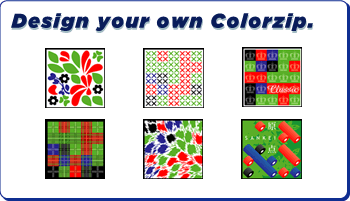
It's only a matter of time before the world around you is painted with ColorCodes. Wherever you go, wherever you look -- TV, magazines, store shelves, shopping bags, billboards, web banners, T-shirts and more -- you'll see ColorZip in action. Image Credit: ColorZip Japan, Inc.

3D Barcode - Auto ID "CUBED"

That's digital 2D code "X" axis, "Y" axis, and Color!

To the power of three ... that's what I say! What could be more powerful than a code that incorporates color as one of it's discernments? After all, this is a color world.

QR Code (a registered trademark of DENSO WAVE INCORPORATED) breaks out of it's shell through the introduction of a new automatic identification symbology variant - the ColorCode (ColorCode and ColorZip are registered trademarks of ColorZip Media Inc.).

ColorCode is the name of the first ever "3D Barcode" utilized by a server-based content delivery system known as ColorZip.

At the moment, ColorCode is a closed and managed source code symbology designed for use by Brand Managers and Marketing Communication professionals through ColorZip Media - a flexible, real-time, interactive content management system that provides up-to-the-minute CRM data to the consumer.

So, with the ColorZip system, all a consumer needs to do is point a CCD or CMOS camera (with a minimum 100,000-pixel resolution) at TV screens, print ads, magazines, POP displays, outdoor boards, electronic screens, product packages, web banners, T-shirts, and etc. containing a ColorCode, and decoded information sends the consumer's computer or phone to a web server that, in turn, delivers digital information to the consumer that he can use to be informed or make a decision.

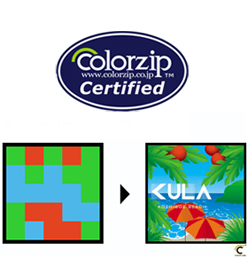
ColorZip Japan now announces [ColorZip Certified Program] to give certificate to our trusted partners and their products. The program is set to find creative design or hardware companies who can cooperate with us to make the ColorCode designs or improve hardware. After thoroughly evaluating creativity, robustness of their product and technology, ColorZip's Partnership is certified and official logo is provided. With the ColorCode, you can appeal your reliability and expand business chances. Image Credit: ColorZip Japan, Inc.

Imagine the possibilities of reaching out to consumers on-the-fly when ColorCodes can be read quickly and easily from a 15 foot distance by mobile phones, Cell PDAs, PCs, and other devices equipped with cameras. Say good-bye to exclusively communicating through one-dimensional print display methodologies.

Excerpts from ColorZip Japan, inc. website -

There's a colorful new world to be explored.

Point your mobile phone at a model in a magazine ad and zip you're visiting her website.

Point your Cell PDA at a music video on TV and zip you've got a sample of the hit single.

Point your cell phone at your favorite team's logo and zip you know the score.
That's the power of ColorZip.

ColorZip works with mobile phones, PC cameras, and other imaging devices that read ColorCodes. Let's say you see a poster for a movie you're interested in. Point your mobile phone at it. The camera in your phone reads a ColorCode printed on the poster. The ColorCode contains information provided by a server. The server then sends data to your phone in the form of content, perhaps a movie trailer. Best of all, it happens instantly, in a zip.


The ColorCode was exhibited at the AUTO-ID EXPO by SATO (printers) held at TOKYO BIG SIGHT. The flower motif ColorCode is for use on flower tags at a florist or nursery. Image Credit: ColorZip Japan, Inc.

Every picture tells a story.

ColorZip also makes watching TV an interactive experience. Suppose you see a product you like on a TV show or commercial. Point your mobile phone at the screen and zip, you can order the product. Perhaps you're watching a TV quiz show. With ColorZip you could play along from home, "answering questions" with your phone and instantly winning prizes.

There are more than 17 billion color patterns available in a 3 mm square code, and in larger codes the possibilities are infinite. Codes can be created in wide variety of shapes, sizes and colors and printed on paper, fabric, glass and other materials. They can appear as corporate and brand logos, designer labels, photos, and virtually anything you can imagine.


It's only a matter of time before the world around you is painted with ColorCodes. Wherever you go, wherever you look -- TV, magazines, store shelves, shopping bags, billboards, web banners, T-shirts and more -- you'll see ColorZip in action.
All you need to do is zip.
Reference Here>>


ColorCodes from Origin through Mobile Site have been designed by the Sankei Co Ltd.'s desingners. The design represents their corporate profile and philosophy. Image(s) Credit: ColorZip Japan, Inc.

Excerpts from Newsweek International via MSNBC early this year-

Using Color Codes To Browse the Web
By Christian Caryl (with B. J. Lee in Seoul) - Newsweek International - Jan. 16, 2006 issue

It's an advertiser's dream. Imagine you're sitting in your favorite cafe when something in the business pages catches your eye. That company you're reading about sounds intriguing. So you take out your mobile phone and focus the camera lens on a small splotch of color embedded in the corner of the article. Suddenly the phone's screen is displaying real-time stock prices and up-to-the-minute company headlines.

It's become a truism that the Internet is transforming the way businesses reach their customers. But among advertisers there's a nagging sense that the online world is still too disconnected from more traditional media, like print. For most users, gaining access to the Internet still means sitting in front of a computer and hammering away at a keyboard - a setup far removed from the experience of reading the morning paper or thumbing through a magazine. Advertisers would instead like to give print readers immediate access to the full range of Web-based information. Colorzip Media, a South Korea-based company, is one of the numerous small firms hoping to bridge this divide.

Colorzip's idea is to build on the pros of bar codes while shedding the cons. The intricate structure of bar codes makes them hard to read; scanners have to be close and precise. And if anything else gets in the way - an ad, for example - the scanner can't cope.


A few years ago Korean computer scientists came up with a new kind of code based on color patterns, which can be easily incorporated into company logos or other graphic designs. Colors are much easier for scanners to read, and they help users home in on the content. Colorzip codes have the added advantage of simplicity.

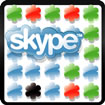
The design highlights the Skype logo and uses plenty of Skype light blue within the ColorCode. Image Credit: ColorZip Japan, Inc.

Unlike a data-heavy bar code, all a Colorzip code communicates when it's scanned is an index, a pathway to content stored on a server. That links the reading device to the desired content which then pops up on the screen.

Even better, the colors can be read at relatively long distances - say, half a meter away and at poor resolutions. Colorzip codes have already been used on TVs, for example, with viewers voting to express their preferences for the outcome of a show. You focus your phone's camera on a splotch of color in the corner of the screen and press the button; you then find yourself at a Web site.

"We're able to put content onto the code to make it attractive," says Christopher Craney, CEO of Colorzip's Japan subsidiary.
----
But who goes to the trouble of carrying around a scanner? The answer: 60 percent of mobile-phone users in South Korea and Japan. Their phones come with Quick Response readers, based on a code
[a 2D code - QR Code invented by DENSO WAVE CORPORATION] that's somewhere between bar codes and the version proposed by Colorzip. With some software from Colorzip, users can zap everything from specially made Colorzip postage stamps issued by the postal service to T shirts or caps marked with jazzy graphics, and be directed to a Web site.

The technology has a drawback. Because the codes can be photographed or copied, they might be susceptible to hacking.
----
But the color codes may presage a day when the combination of user-friendly codes and the Google-sifted Net universe opens up myriad possibilities.
Read All>>

Check out the most powerful 3D/Auto ID "Cubed" code designed to date>>